Introduction
Recent advancements in radiation therapy have facilitated the delivery of precise and uniform radiation doses to tumour sites while minimizing exposure to healthy tissues [ 1 ]. Accurate tumour localization is essential for the application of higher dose gradients in dose distribution. Intensity-Modulated Radiation Therapy (IMRT) is an advanced form of External Beam Radiation Therapy (EBRT) that enables the creation of steeper dose gradients between the prostate and surrounding Organs at Risk (OARs), such as the rectum and bladder [ 2 , 3 ].
The prostate gland is susceptible to displacement due to volumetric changes in the rectum and bladder. Given the potential for prostate gland displacement within the pelvis, precise delineation of tumour volume and appropriate margin determination are crucial in prostate cancer radiotherapy. IMRT enables the delivery of higher radiation doses to the prostate while minimizing exposure to OARs. However, the steep dose gradients inherent to IMRT introduce greater uncertainties compared to conventional techniques due to internal organ motion. Helical Tomotherapy (HT) is a form of IMRT that incorporates 3D image guidance. It utilizes a 6 MV linear accelerator to deliver modulated helical X-ray beams to the tumour through a 64-leaf collimator [ 4 ].
Delivering radiation therapy to moving organs presents a significant challenge. Reducing margins in the contouring of moving target volumes can potentially decrease the dose delivered to the target itself. Goulet et al. [ 5 ] estimated that the maximum achievable dose to the prostate gland was 83.0, 113.1, and 135.9 Gy for margins of 3, 5, and 10 mm, respectively.
The selection of an appropriate margin in prostate cancer radiotherapy is influenced by multiple factors. The type and timing of imaging modalities employed, such as 2D or 3D ultrasound, Electronic Portal Imaging Device (EPID), Kilovoltage (kV) and Megavoltage (MV) imaging, Cone-beam Computed Tomography (CBCT), MV-CT, and CT-on-rails, impact margin selection. The choice and utilization of patient immobilization devices can enhance accuracy in margin determination. Patient preparation protocols, including bladder and rectal filling, can affect tumour position and, consequently, margin selection. Radiotherapy techniques, such as conformal four-field techniques, IMRT, HT, and Volumetric Modulated Arc Therapy (VMAT), differentially influence dose precision and conformity, which are relevant to margin selection. Accurate delineation of the target volume, including the prostate alone, prostate with seminal vesicles, or prostate, seminal vesicles, and lymph nodes, is essential for selecting the appropriate margin. Selecting the appropriate margin in prostate cancer radiotherapy necessitates careful consideration of these factors and the selection of a suitable method for each patient [ 6 ].
Mzenda et al. [ 7 ] proposed a model to determine the target volume, considering errors due to internal organ motion. Patient realignment resulted in a decrease in maximum prostate displacement from 12 mm to 5 mm. A 5 mm increase in the CTV margin effectively compensated for prostate movement [ 7 ].
In EBRT for prostate cancer, organ motion introduces both systematic and random errors and uncertainties into treatment delivery. Image-guided Radiotherapy (IGRT) is employed to mitigate systematic errors, such as those arising from treatment planning, patient positioning, and target delineation. Additionally, IGRT can potentially reduce random positioning errors that may occur during treatment delivery.
To account for target volume setup and displacement errors, a safety margin is typically added around the CTV. Studies have shown that the most significant prostate displacements occur in the Anterior-posterior (AP) and Superior-inferior (SI) directions [ 2 ]. Rectal and bladder filling are recognized as primary contributors to prostate motion in these directions and are considered key factors influencing prostate displacement between treatment sessions [ 8 ].
Online setup in Tomotherapy involves patient positioning based on imaging acquired immediately before treatment. This method offers the advantage of verifying and adjusting patient position relative to bony anatomy prior to treatment delivery. However, it can be a time-consuming process. Offline setup, relying on surface markings and tattoos, can potentially reduce patient setup time and systematic setup errors. Tomotherapy enables patient positioning based on bony anatomy using MVCT [ 9 ]. Nevertheless, as bony anatomy may not accurately reflect the position of the prostate and OARs, MVCT-based positioning alone is insufficient for precise target volume localization in prostate cancer. A study by Tanyi et al. involving 14 patients demonstrated that tattoo-based setup required margins of 7.5, 11.4, and 16.3 mm in the lateral, SI, and AP directions, respectively, to ensure 90% coverage of the prescribed dose [ 10 ].
Internal prostate motion during radiotherapy with bone-based setup significantly impacts the determination of PTV margins. While various studies have proposed different margin strategies, a comprehensive understanding of the factors influencing prostate displacement remains essential. This study aimed to quantify inter-fractional prostate displacement and identify patient-specific anatomical factors that may necessitate PTV margin expansion or reduction. Bladder and rectal volume changes, influenced by factors, such as bloating, gas accumulation, and bowel movements, can significantly impact prostate position. Rectal volume reduction, particularly in patients with larger initial rectal volumes, is a well-documented phenomenon that can lead to posterior prostate displacement and potential treatment underdosage. This underscores the limitations of bone landmark-based IGRT and IMRT and emphasizes the need for more advanced techniques [ 6 ].
A novel aspect of this study is the calculation of inhomogeneous PTV margins in three dimensions to ensure 95% dose coverage in the AP direction. Additionally, we investigate the impact of prostate, bladder, and rectal volume changes on prostate displacement, providing valuable insights for optimizing treatment planning and delivery.
Material and Methods
Patient characteristics
This prospective study investigated 20 patients diagnosed with prostate cancer who had not undergone radical prostatectomy. The study was conducted between the years 2021 and 2022, following the approval of the Institutional Review Board (IRB). All participants provided written informed consent prior to study enrolment.
Baseline prostate volume measurements were obtained using Transrectal Ultrasound (TRUS) for all patients. The mean age of the study population was 67 years (standard deviation [SD] = 5.87 years), with a range of 54 to 78 years. The mean weight was 80 kg. Stratification of the study population by Prostate-specific Antigen (PSA) level revealed that 5% of patients had a PSA level <10 ng/mL, 10% had a PSA level between 10 and 20 ng/mL, and 85% had a PSA level >20 ng/mL A detailed summary of patient characteristics is presented in Table 1.
| Age | Volume of Prostate | Weight | Stage | Gleason Score | Psa | |
|---|---|---|---|---|---|---|
| 1 | 69 | 53cc | 74 | T4 | 4+4 | 28 |
| 2 | 54 | 41cc | 82 | N0T4 | 3+4 | 52 |
| 3 | 71 | 51cc | 86 | T3a N0 | 4+5 | 16 |
| 4 | 61 | 39cc | 86 | T4 | 3+4 | 31 |
| 5 | 67 | 69cc | 72 | T3B N0 | 3+4 | 34 |
| 6 | 64 | 58cc | 78 | T3a | 3+3 | 25 |
| 7 | 62 | 58cc | 82 | T7 | 4+4 | >100 |
| 8 | 64 | 38cc | 87 | T4 | 3+4 | 46 |
| 9 | 71 | 98cc | 97 | T2C N0 | 3+3 | >100 |
| 10 | 68 | 41cc | 72 | T3a N0 | 5+5 | 47 |
| 11 | 66 | 43cc | 72 | T4 | 3+3 | 12 |
| 12 | 68 | 41cc | 70 | T3aN0b | 5+5 | 47.5 |
| 13 | 71 | 39cc | 80 | T3a N0 | 3+3 | 22.8 |
| 14 | 59 | 97cc | 83 | T3aN0b | 4+4 | 20.5 |
| 15 | 71 | 56cc | 78 | T4 | 5+5 | 51 |
| 16 | 65 | 37cc | 80 | T3a N0 | 3+4 | >100 |
| 17 | 78 | 56cc | 75 | T3a | 5+5 | 39 |
| 18 | 65 | 37cc | 80 | T3a | 4+3 | 53 |
| 19 | 75 | 42cc | 102 | T2 N0 | 5+4 | 7 |
| 20 | 76 | 39cc | 65 | T2C N0 | 3+4 | >100 |
Patient Preparation
A standardized protocol for bladder and rectal filling was not adhered to in this study. Nevertheless, patients were instructed to evacuate their rectum prior to both CT simulation (CTsim) and treatment sessions. Additionally, they were advised to consume 500 mL of water one hour before each stage.
CT Simulation (CTsim)
CTsim was conducted on patients with a full bladder and an empty rectum using a Siemens Healthineers Syngo CT VB20 machine. Immobilization devices and skin tattoos were employed to ensure patient positioning. Axial CT images were acquired with a 5-5-millimeter slice thickness. Prior to CTsim, every effort was made to minimize bowel gas and stool. If residual gas or stool was observed on the images, patients were advised to evacuate their bowel and return for a repeat CTsim. All patients underwent standard simulation with skin tattoos to mark the isocenter. Daily pre-treatment setups relied on room lasers and tattoo alignment.
Treatment Planning Process
Initially, simulated CT data was transferred to the treatment planning system. Subsequently, target volume contouring was performed by an experienced radiation oncologist utilizing the Accuracy Precision version 2.0.1.1 software. In this step, in addition to the target volume, OARs, such as the femoral head, rectum, and bladder were also contoured. The prostate and seminal vesicles were designated as the CTV. The PTV was then delineated by adding a margin of 6 mm anteriorly and 4 mm posteriorly to the CTV. The treatment planning process was conducted in accordance with International Commission on Radiation Units and Measurements (ICRU) protocols [ 11 ].
Treatment Delivery
Similar to CTsim, patients were instructed to evacuate their bowels one hour prior to each treatment session and ingest approximately 500 ml of water. Patients were positioned supine on the treatment couch with their knees immobilized using a fixation device. Initial patient setup was achieved by aligning three skin markers with lasers in the treatment room.
A MVCT scan was acquired for each patient. As patients in this study lacked prostate implants or internal fiducial markers for manual image registration, the MVCT images were aligned to the bony anatomy of the reference CT images. Final adjustments were made before treatment delivery. It is important to note that these adjustments were based solely on bony anatomy and did not account for potential organ motion.
Dose constraints for OARs were defined within the treatment planning system. The prescribed dose to the tumour, determined by the oncologist based on disease stage, ranged from 54 to 70 Gy and was delivered using a Siemens Radiaxact x9 accuracy tomotherapy system.
Image Analysis and Data Registration
Due to significant target volume displacement in the AP direction, prostate and seminal vesicle displacement was measured in this direction. Target displacement, rotation, and deformation in other directions were neglected. CTsim and MVCT images were fused using MIM software. Figure 1 shows an example of MVCT, CTsim, and fused CTsim images with the contoured CTsim overlaid on the MVCT images.
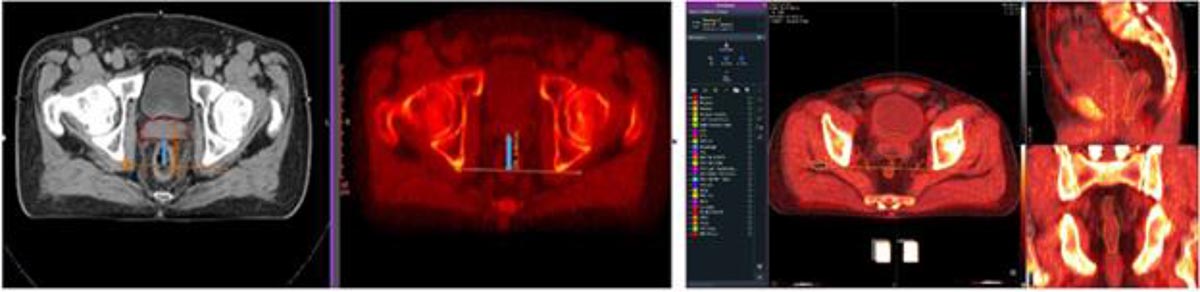
Figure 1. Fusion of contoured CTsim images with MVCT images using MIM image registration and analysis software (right side). MVCT image (middle image). CTsim image (left side).
CTsim images in a specific slice were used to measure the distance between the seminal vesicles (PTVSV), the centre of the prostate (PTVpc), and the apex of the prostate (PTVpa) relative to the bony anatomy. These distances were also measured in the corresponding MVCT image slices. The difference between the measurement values in the MVCT images and the reference images indicates the extent of seminal vesicle and prostate displacement on the day of treatment. Positive values represent PTV displacement in the anterior direction, while negative values indicate displacement in the posterior direction. The bladder diameter in the AP and SI directions was measured in the CTsim and MVCT images. The bladder volume was then calculated using the formula [ 12 ].
If the bladder volume on the treatment days was less than the bladder volume on the CTsim day, the decrease in volume was recorded with a negative sign. Otherwise, it was recorded with a positive sign. On days when the patient had bloating or stool, the diameter of the rectum containing gas was measured in the MVCT image slices of the PTVsv, PTVpa, and PTVpc regions. The approximate area of this region was then calculated using the formula A=1/4πdAP×dLR, where dAP is the AP diameter and dLR is the Left-right (LR) diameter [ 6 ]. The volume of this region was then obtained by multiplying this area by the MVCT slice thickness (5 mm).
The changes in rectal volume were not uniform across different locations. For example, the rectal geometry changed significantly depending on the location of gas and stool accumulation within the bowel. Therefore, to investigate the effect of changes in bowel volume on PTV displacement, the volume was measured and analysed in three separate slices that included the seminal vesicles, the centre of the prostate, and the apex of the prostate.
Statistical Analysis
The correlation between patients’ anatomical characteristics, including prostate volume, age, weight, and changes in bladder and rectum volumes, with the mean prostate displacement was statistically analysed. IBM SPSS Statistics version 27 was used for the statistical analysis, and linear regression analysis with a P-value<0.05 was considered statistically significant. To achieve a 95% dose coverage to the target volume, the required margin was calculated using the van Herk formula (M=2.5Ʃ+0.7σ) [ 13 ]. This formula is the most widely used method for determining the margin to ensure 95% dose coverage. In this formula, M represents the required margin, and Ʃ and σ are the systematic and random uncertainties, respectively [ 8 , 13 ]. It is important to note that this margin is not calculated for the penumbra near the collimator edge or block. In this study, the required margin was defined as an additional margin on the CTV to determine the PTV, which is calculated to account for target volume motion and compensate for systematic and random uncertainties.
Results
A total of 497 MVCT scans from 20 patients were retrospectively reviewed and analysed. Figure 2 presents a bar graph illustrating the mean target volume displacement across all treatment sessions and patients. Table 2 displays the correlation between the mean PTV displacement and the patients’ anatomical characteristics.
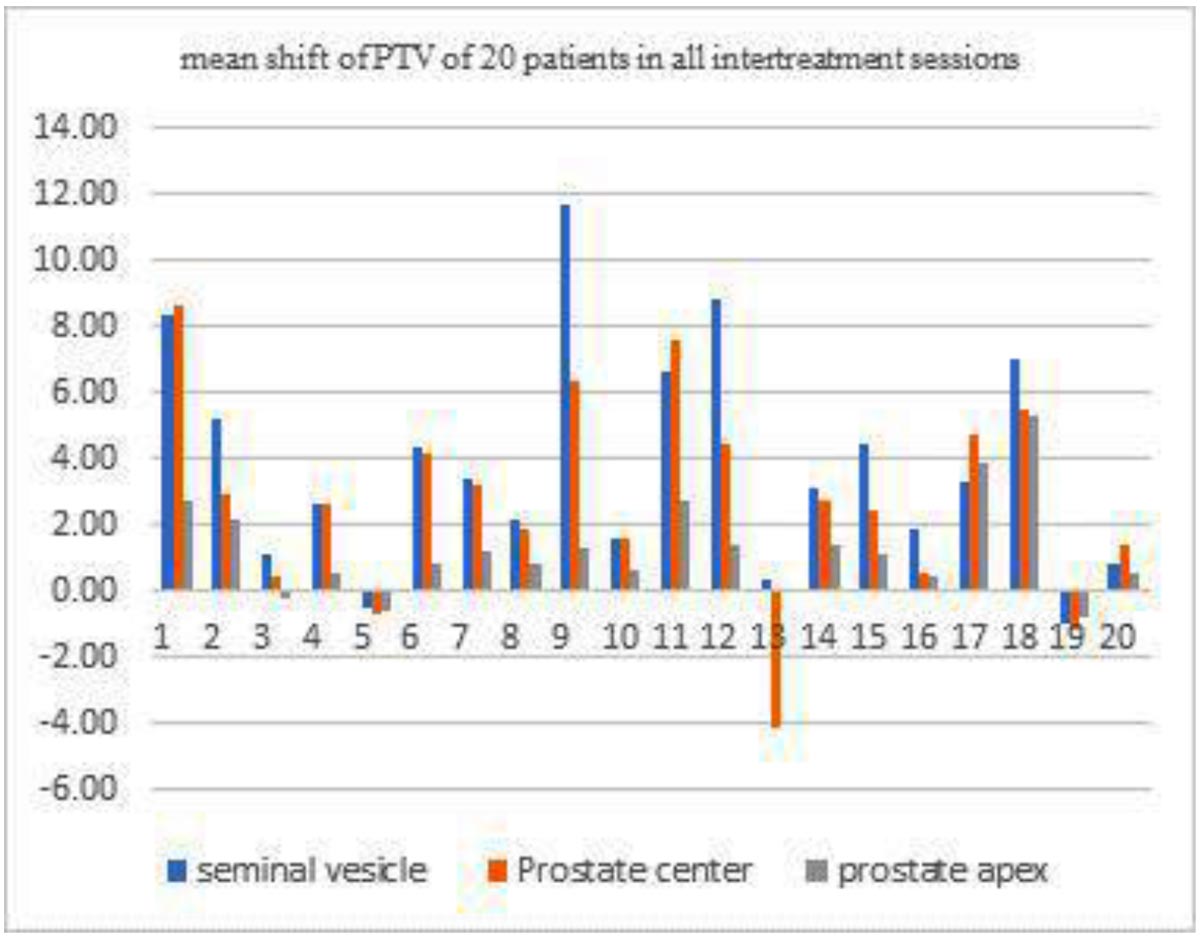
Figure 2. Presents a bar chart depicting the mean displacement of the prostate and seminal vesicles across all treatment sessions.
| Seminal vesicle mean shift (P-value) | Prostate center mean shift (P-value) | Apex of prostate mean shift (P-value) | |
|---|---|---|---|
| Age | 0.818 | 0.73 | 0.858 |
| Weight | 0.451 | 0.51 | 0.164 |
| Prostate volume | 0.496 | 0.576 | 0.643 |
| Bladder volume | +0.00173 | +0.00006 | +0.00315 |
| Rectal volume | +0.00903 | +0.03021 | +0.01044 |
| +indicate Significantly correlation | |||
The mean displacement of the PTV is presented in Table 3. The seminal vesicles exhibited the greatest displacement, while the prostatic apex demonstrated the least.
| Axis of displacement (anterior posterior) | Mean shift and direction (mm) | SD (σ) (mm) | Range (mm) |
|---|---|---|---|
| PTVsv | 3.57 anterior | 5.25 | 24 anterior, -13 posterior |
| PTVpc | 2.58 anterior | 4.42 | 24.7 anterior, -9.6 posterior |
| PTVpa | 1.20 anterior | 2.35 | 10 anterior, -4.6 posterior |
| PTV: Planning Target Volume, sv, seminal vesicle, pc, prostate center, pa, prostate apex, SD: Standard Deviation | |||
From the 497 total treatment sessions, cases were selected, where the patient exhibited rectal gas only and the bladder volume remained unchanged relative to the reference planning CT images. The mean and standard deviation of the target volume displacement were subsequently calculated for these sessions. In the next step, sessions were selected where the patient presented with a rectal volume similar to the planning CTsim, but with a variable bladder volume. The mean and standard deviation of the target volume displacement were calculated for these cases and are presented in Table 4.
| Target | Average (SD) Effect of rectal gas | Average (SD) Effect of bladder variation |
|---|---|---|
| PTVsv | 4.57 (5.74) | 2.4 (4.9) |
| PTVpc | 3.73 (6.0) | 1.53 (3.79) |
| PTVpa | 1.36 (2.9) | 0.38 (1.83) |
| PTV: Planning Target Volume, sv: seminal vesicle, pc: prostate center, pa: prostate apex, SD: Standard Deviation | ||
Table 5 presents the calculated margins required to achieve 95% coverage of the prescribed dose, determined using the Van Herk formula. The findings highlight the non-uniform nature of the margin applied in the conversion from CTV to PTV.
| Shift Direction | Margin required to cover 95% of study samples (mm) | |
|---|---|---|
| PTVsv | anterior | 12.19 |
| posterior | 7.22 | |
| PTVpc | anterior | 9.50 |
| posterior | 4.48 | |
| PTVpa | anterior | 4.36 |
| posterior | 2.51 | |
| PTV: Planning Target Volume, sv: seminal vesicle, pc: prostate center, pa: prostate apex, SD: Standard Deviation | ||
Discussion
This study revealed that 82% of displacements were anterior, while 18% were posterior. In terms of symptom presentation, 13% of treatment sessions were characterized by bloating alone, and 38% exhibited only bladder volume changes. A combination of bladder volume changes and rectal gas/bloating was observed in 35% of sessions. Notably, only 14% of sessions aligned with the planned treatment conditions. Consequently, in 86% of cases, the delivered treatment deviated from the treatment plan, resulting in suboptimal dose delivery to the target volume.
Given the prostate’s non-rigid attachment to the bony anatomy and the significant displacement observed relative to these structures (Figure 1), adjustments based solely on bony anatomy can introduce additional random and systematic errors. Therefore, it is essential to identify the underlying roots of these differences and implement strategies to mitigate their effects.
Modern radiotherapy has achieved remarkable precision, with accuracies on the order of one-tenth of a millimetre, thanks to advancements in accelerator technology, Multi-leaf Collimators (MLCs), IGRT, and treatment planning software. Nevertheless, the accuracy of these technologies remains susceptible to uncertainties in treatment parameters, such as internal organ motion and setup errors, which can elevate the risk of disease recurrence and treatment failure. A novel aspect of this study is the calculation of inhomogeneous PTV margins in three dimensions to ensure 95% dose coverage in the AP direction. The primary objective of these evaluations is to enhance treatment outcomes by optimizing treatment planning, ensuring precise dose delivery to the target volume, and minimizing radiation-induced side effects to sensitive OARs.
Pérez-Romasanta et al. conducted a study to determine appropriate PTV margins for prostate cancer and suggested that margins of 10.5-9 mm in the LR, 12.4-10.6 mm in the SI and 17.8-15.2 mm in the AP directions were necessary to account for PTV motion [ 14 ].
In this study, an EPID imaging system was employed for patient setup. Due to the inherent lower accuracy of EPID-based setup compared to MVCT, larger margins were calculated to ensure 95% dose coverage. To more precisely quantify PTV displacement, encompassing the seminal vesicles and prostate, the PTV was subdivided into three distinct regions. Subsequently, three separate slices were analysed for each patient: the seminal vesicle, the prostate centre, and the prostate apex (base).
Figure 1 presents the mean displacement of various PTV components. The data reveals that in a majority of patients, the PTV components exhibited a mean anterior displacement, a phenomenon likely attributable to the influence of adjacent anatomical structures such as the rectum and bladder. Table 2 shows the correlation of age, weight, prostate volume, bladder volume, and rectal volume with the mean prostate displacement. Considering that the significance level was set at P-value<0.05, no significant relationship was found between prostate displacement and characteristics, such as age, weight, and prostate volume. As indicated in rows 5 and 6 of Table 3, a significant correlation exists between prostate displacement and factors, such as bladder and rectal volume. The mean and standard deviation of AP PTV displacement, also presented in Table 3, reveal that the greatest displacement occurred in PTVsv, while the least displacement was observed in PTVpa. This suggests that PTVsv, due to its proximity to the bladder and rectum, is most susceptible to variations in these organs.
The significant displacement of the seminal vesicles, ranging from 24 millimetre anteriorly to 13 millimetre posteriorly, underscores the limitations of relying solely on bone anatomy, tattoos, and skin markings for treatment delivery. Such internal variations can lead to suboptimal dose delivery to the target volume, potentially resulting in underdosing and increased risk of acute and late toxicities to critical organs like the rectum and bladder. Moreover, it may compromise local control and increase the probability of disease recurrence.
A comparative analysis of the data in Table 4, aimed at isolating the impact of rectal gas and bladder volume changes on PTV displacement, reveals that rectal gas variations have approximately twice the effect on PTV displacement compared to bladder volume changes. This finding emphasizes the predominant influence of rectal gas on target volume displacement during treatment sessions.
The margin calculated using the van Herk formula to achieve 95% dose coverage in the posterior-anterior direction was asymmetric, ranging from 12.19 to 7.22 mm for PTVsv, 9.5 to 4.48 mm for PTVpc, and 4.36 to 2.51 mm for PTVpa. This is significantly larger and less uniform compared to the fixed 6 mm anterior and 4 mm posterior margin currently applied at the Radiotherapy Centre of Esfahan’s Omid Hospital.
Murthy et al. in 2013 proposed appropriate margins for 90% dose coverage in prostate cancer tomotherapy: 11.3 mm in the LR direction, 9.5 mm in the SI direction, and 13.4 mm in the AP direction [ 4 ]. While Murthy et al.’s study involved a larger patient cohort, our findings indicate greater prostate displacement in the anterior and superior directions compared to the posterior and inferior directions. Consequently, a non-uniform margin calculation, incorporating this significant factor, would have been more suitable. Nairz et al. conducted a study involving 27 patients with prostate cancer, analysing a total of 882 CBCT scans. The calculated margins required for 90% dose coverage of the PTV were 8.6 mm in the LR direction, 10.4 mm in the SI direction, and 14.4 mm in the AP direction [ 15 ]. Tsai et al. in their 2012 study, advocated for a 4.5 mm margin for IGRT-IMRT techniques [ 16 ]. This margin was derived from phantom studies, which primarily focused on setup errors, thereby neglecting organ motion and displacement. Maruoka et al. investigated the correlation between age, weight, bladder volume, prostate volume, rectum volume, prostate displacement, and the necessary margin to achieve a 90% dose coverage during IGRT. The study analysed data from 16 patients and 586 MV-CBCT scans. The calculated average margin was 4.6 mm anteriorly, with a range of 1.4-17 mm, and 3.1 mm posteriorly, with a range of 0.8-6.9 mm. The study also revealed a positive correlation between rectal volume and the required posterior margin [ 6 ]. Several studies have highlighted the significant internal motion of the prostate gland, especially in the AP direction, during EBRT for prostate cancer [ 16 , 17 ]. Given the variability of rectal and bladder volumes due to changes in gas and stool content and urine volume, respectively, managing AP prostate motion during EBRT is crucial from two perspectives: tumour control and late toxicity. In a study by Tanyi et al. 14 patients were enrolled. The margin to cover 90% of the prescribed dose in prostate IMRT was calculated to be 10.9 mm in the SI direction and 16 mm in the AP direction, assuming static conditions during treatment and relying on skin markings and implanted fiducial markers [ 10 ].
The results of this study may deviate from the margin calculated in our previous work due to the use of electromagnetic transponders implanted within the prostate and adjustments based on tattoos and implanted markers. In this study, the significant movements of the prostate and seminal vesicles relative to bony anatomy, induced by rectal distension, were evaluated by analysing a large number of scans (an average of 24 scans per patient). By examining the displacement of the PTV in the AP direction, the necessary margin to ensure 95% coverage of the prescribed dose was determined. The calculated margin in this study accounted for the potential impact of patient non-compliance with dietary instructions, which can lead to bloating and subsequent prostate displacement.
The sample size of 20 patients may not be adequate to represent a normal population. A larger sample size could potentially yield more accurate results. Additionally, the study focused solely on inter-fractional prostate movements to calculate the PTV margin. Incorporating intra-fractional movements into the analysis could lead to more precise results. Prostate cancer target volume displacement occurs in multiple directions, including AP, LR, and SI. However, this study only measured displacement in the AP direction. A comprehensive understanding of complex target motion and the sociocultural factors influencing treatment adherence is essential to achieve optimal therapeutic outcomes in prostate radiotherapy. Therefore, it is recommended that each radiotherapy centre conduct localized studies to calculate precise and personalized treatment margins. These studies should account for prostate movements in various directions (intra- and inter-treatment) and the factors influencing these movements. After determining the new margin, patients should be monitored for early and late toxicities to assess the impact of the adjusted margin on treatment outcomes. Subsequently, the newly calculated margin can be implemented in clinical practice.
Conclusion
Significant variations in bladder and rectal volumes were found to have a substantial impact on prostate displacement. Our analysis revealed that only 14% of treatment sessions precisely achieved the planned dose distribution. The remaining 86% exhibited deviations in the PTV due to alterations in bladder, rectal, or combined volumes. These findings underscore the critical need to establish adequate PTV margins and ensure accurate dose delivery throughout the target volume. To address these challenges, radiotherapy centres should conduct comprehensive assessments of their unique uncertainties and implement tailored margin calculations.
Acknowledgment
We would like to extend our sincere gratitude and appreciation to all the patients who participated in this study with such patience, as well as to the staff at the radiation therapy center in Omid Hospital, Isfahan.
Authors’ Contribution
V. Shabaninejad collected the data, drafted it, and wrote it. S. Hadinezhad contributed to the statistical analysis. A. Shanei has written and edited the final version of the manuscript. M. Roayaei and A. Akhavan participated in the study design and helped draft and edit the manuscript. All authors contributed to the interpretation of the findings and read and approved the final manuscript.
Ethical Approval
This study was conducted in accordance with ethical guidelines and received approval under the ethics code IR.MUI.MED.REC.1401.003.
Informed Consent
Conscious consent was obtained from all individuals engaged in the study.
Funding
This work was supported by a grant from Isfahan University of Medical Sciences, Isfahan, Iran (grant number: 3400905).
Conflict of Interest
None
References
- Yartsev S, Bauman G. Target margins in radiotherapy of prostate cancer. Br J Radiol. 2016; 89(1067):20160312. Publisher Full Text | DOI | PubMed [ PMC Free Article ]
- Langen KM, Jones DT. Organ motion and its management. Int J Radiat Oncol Biol Phys. 2001; 50(1):265-78. DOI | PubMed
- Cahlon O, Hunt M, Zelefsky MJ. Intensity-modulated radiation therapy: supportive data for prostate cancer. Semin Radiat Oncol. 2008; 18(1):48-57. DOI | PubMed
- Murthy V, Krishnatry R, Mallik S, Master Z, Mahantshetty U, Shrivastava S. Helical tomotherapy-based hypofractionated radiotherapy for prostate cancer: a report on the procedure, dosimetry and preliminary clinical outcome. J Cancer Res Ther. 2013; 9(2):253-60. DOI | PubMed
- Goulet CC, Herman MG, Hillman DW, Davis BJ. Estimated limits of IMRT dose escalation using varied planning target volume margins. Phys Med Biol. 2008; 53(14):3777-88. DOI | PubMed
- Maruoka S, Yoshioka Y, Isohashi F, Suzuki O, Seo Y, Otani Y, et al. Correlation between patients’ anatomical characteristics and interfractional internal prostate motion during intensity modulated radiation therapy for prostate cancer. Springerplus. 2015; 4:579. Publisher Full Text | DOI | PubMed [ PMC Free Article ]
- Mzenda B, Hosseini-Ashrafi M, Palmer A, Liu H, Brown DJ. A simulation technique for computation of the dosimetric effects of setup, organ motion and delineation uncertainties in radiotherapy. Med Biol Eng Comput. 2010; 48(7):661-9. DOI | PubMed
- Ghadjar P, Fiorino C, Munck Af Rosenschöld P, Pinkawa M, Zilli T, Van Der Heide UA. ESTRO ACROP consensus guideline on the use of image guided radiation therapy for localized prostate cancer. Radiother Oncol. 2019; 141:5-13. DOI | PubMed
- Wong JR, Gao Z, Uematsu M, Merrick S, Machernis NP, Chen T, Cheng CW. Interfractional prostate shifts: review of 1870 computed tomography (CT) scans obtained during image-guided radiotherapy using CT-on-rails for the treatment of prostate cancer. Int J Radiat Oncol Biol Phys. 2008; 72(5):1396-401. DOI | PubMed
- Tanyi JA, He T, Summers PA, Mburu RG, Kato CM, Rhodes SM, et al. Assessment of planning target volume margins for intensity-modulated radiotherapy of the prostate gland: role of daily inter- and intrafraction motion. Int J Radiat Oncol Biol Phys. 2010; 78(5):1579-85. DOI | PubMed
- Monti AF, Ostinelli A, Frigerio M, Cosentino D, Bossi A, Cazzaniga LF, Scandolaro L, Valli MC. An ICRU 50 radiotherapy treatment chart. Radiother Oncol. 1995; 35(2):145-50. DOI | PubMed
- Polat B, Guenther I, Wilbert J, Goebel J, Sweeney RA, Flentje M, Guckenberger M. Intra-fractional uncertainties in image-guided intensity-modulated radiotherapy (IMRT) of prostate cancer. Strahlenther Onkol. 2008; 184(12):668-73. DOI | PubMed
- Van Herk M. Errors and margins in radiotherapy. Semin Radiat Oncol. 2004; 14(1):52-64. DOI | PubMed
- Pérez-Romasanta LA, Lozano-Martín E, Velasco-Jiménez J, Mendicote-León F, Sanz-Martín M, Torres-Donaire J, et al. CTV to PTV margins for prostate irradiation. Three-dimensional quantitative assessment of interfraction uncertainties using portal imaging and serial CT scans. Clin Transl Oncol. 2009; 11(9):615-21. DOI | PubMed
- Nairz O, Merz F, Deutschmann H, Kopp P, Schöller H, Zehentmayr F, et al. A strategy for the use of image-guided radiotherapy (IGRT) on linear accelerators and its impact on treatment margins for prostate cancer patients. Strahlenther Onkol. 2008; 184(12):663-7. DOI | PubMed
- Tsai JS, Micaily B, Miyamoto C. Optimization and quality assurance of an image-guided radiation therapy system for intensity-modulated radiation therapy radiotherapy. Med Dosim. 2012; 37(3):321-33. DOI | PubMed
- Snir JA, Battista JJ, Bauman G, Yartsev S. Evaluation of inter-fraction prostate motion using kilovoltage cone beam computed tomography during radiotherapy. Clin Oncol (R Coll Radiol). 2011; 23(9):625-31. DOI | PubMed


