Introduction
The Internet of Things (IoT) in healthcare uses interconnected devices, sensors, and software to collect, share, and analyze real-time health data for patient care operations [ 1 ]. The major applications include Remote Patient Monitoring (RPM) through wearable devices for chronic disease management, smart hospital systems with connected medical equipment and asset tracking, and medication management with smart pill dispensers [ 2 ]. IoT also enhances emergency care through data-enabled ambulances, supports predictive analytics for preventive care, and improves elderly care with fall detection systems. The authors Li and Guo [ 3 ] made a comprehensive study on the advancements and methodologies in blood group testing. The significance of precise blood type is highlighted by the researchers for safe organ transplants, blood transfusions, and a knowledge of genetic heredity. The traditional blood grouping system needs a sample of blood smear in the slide. The blood group is indicated through ABO typing and Rh typing. A blood sample is combined with antibodies with type A and type B blood in ABO typing to observe the blood cells clump, indicating a reaction [ 4 ]. After that, the serum is combined with known type A and type B blood for back typing, which looks for the presence of antibodies. Similar to this, Rh typing examines the cell protein surface on red blood cells. These tests together determine a person’s blood type [ 5 ].
High-resolution pictures of blood smears or blood samples placed on a slide are captured by devices used in macro or microscopic imaging. These images are then processed for both blood group determination and blood cell count [ 6 ]. The distinct clumping patterns that emerge during the antibody combination reactions can be identified by image processing systems [ 7 ]. These patterns can be used to identify and categorize the blood group using algorithms, such as segmentation, thresholding, and edge detection [ 8 ]. By extracting features, such as cell shape, size, and colour from the segmented blood cells, the system can differentiate between different types of cells [ 9 ]. It is possible to classify and count the various cells, such as red blood cells, white blood cells, and platelets, using machine learning methods (e.g., Support Vector Machines and Convolutional Neural Networks) [ 10 ].
Modern blood group typing techniques were examined by author Mahmood [ 11 ] emphasizing improvements in speed, accuracy, and convenience for early prediction. Traditional serological methods, such as the microcolumn gel method, remain widely in clinical settings due to their precision in ABO and Rh typing. However, emerging technologies like paper-based and microfluidic testing offer significant improvements for point-of-care diagnostics. Chomean et al. [ 12 ] proposed a rapid paper-based test for determining ABO and Rh blood types in under 10 minutes, using wax-printed channels on filter paper. This method is highly accurate, lightweight, and portable, making it ideal for quick bedside testing or emergencies. Dye-assisted paper-based methods and microfluidic systems also enhance speed and sensitivity, especially in detecting rare blood types [ 3 ].
A novel approach for the automated identification and categorization of blood types using a combination of machine learning algorithms and image processing techniques was proposed by the author Mahmood [ 11 ]. The blood sample images were captured under controlled conditions, and these images were subjected to various pre-processing techniques for noise reduction. The shape, colour intensity, and texture features were extracted from the processed images, and the machine learning model was applied to the extracted features to categorize blood samples into the appropriate groups. Mahmood et al. proposed a software-based blood group determination approach using a Graphical User Interface (GUI) in MATLAB [ 13 ]. Rosales and De Luna [ 14 ] developed a computer-based method for identifying blood types using a combination of image-processing techniques and a machine-learning algorithm.
The main objective of this research is to develop an automated system for blood group determination using image processing techniques integrated with IoT to streamline the diagnostic process. By implementing the universal donor principle, the proposed method eliminates the need for traditional transfusions, lowers the risk of transfusion reactions, and stores results without human errors.
Technical Presentation
Overall Workflow
The blood cell smears were collected by the trained professionals from the patients’ fingerprints and reagents were added with the following standard procedure from COSMOPOLIS Hospital, Ashok Pillar. The proposed IoT-enabled imaging system identifies the patient’s blood group automatically. The 40x to 1000x magnification microscopic camera is connected to an Arduino UNO for motor actuation and a stepper motor for the camera’s forward and backward movement. The slide is placed in the blood slide holder with an LED (Light-Emitting Diode) Display. The camera is connected to Raspberry PI, and the blood smear images were stored in the computer for further processing. MATLAB (Matrix Laboratory) is a programming and simulation environment widely used in engineering, scientific computing, and image processing applications. It provides built-in functions and toolboxes for image processing, machine learning, and data analysis. OpenCV (Open Source Computer Vision Library) is a high-performance library for real-time image processing and computer vision applications. Because of their speed and versatility, both are frequently utilized in medical imaging. The features extracted for blood group identification and detection are performed using MATLAB, and Open CV software, and the blood samples are compared using image processing, and the results of testing can be obtained through the simulation software. The final result after the identification of the blood group using our proposed method will be displayed in the 16×2 LCD (Liquid Crystal Display) alphanumeric display. Figure 1 shows the overall block diagram for the automatic prediction of the blood group from the blood smear images. The blood group is predicted and displayed with an alphanumeric LCD connected to Raspberry Pi.
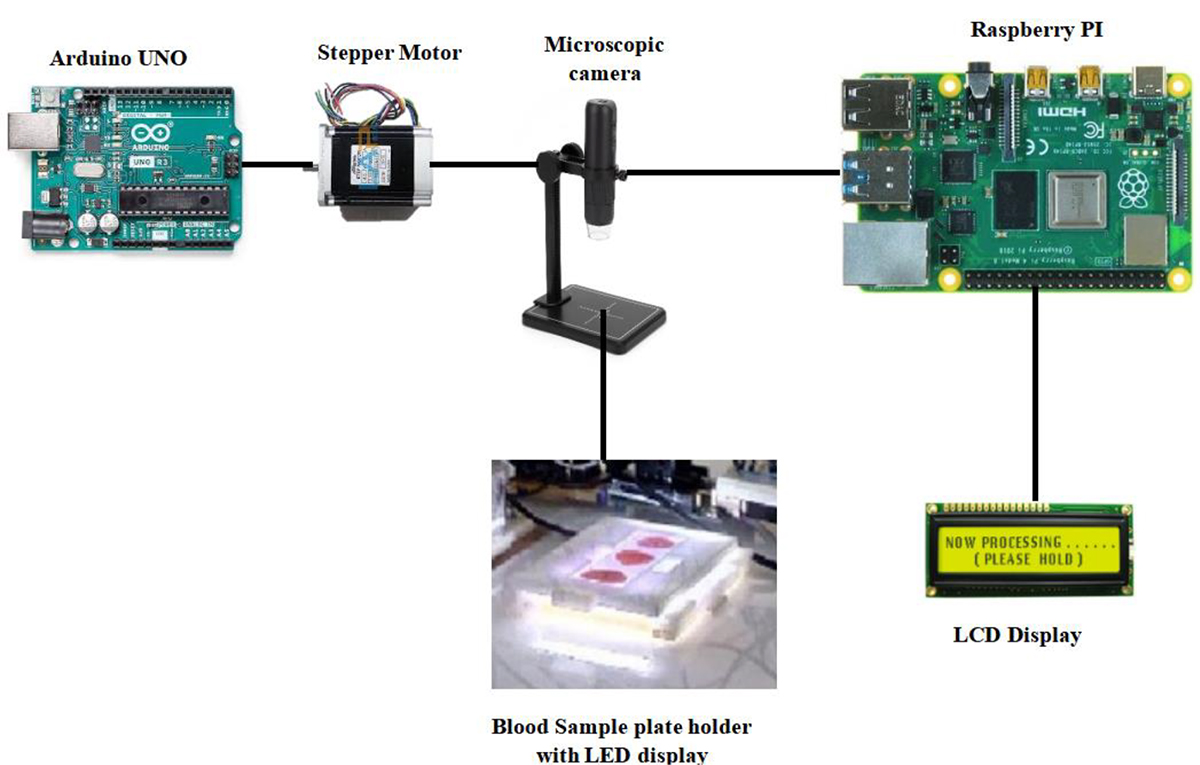
Figure 1. Overall Workflow Diagram for the Automatic Prediction of the blood group from the blood smear images
Image Processing Techniques
The input blood smear image is converted to a grayscale image and then to the colour space image in blue colour. The image is then binarized with a default threshold of 0.5, and a second binary image is created using an adaptive threshold determined by a grey threshold [ 15 ]. A Niblack thresholding method is applied to the binary image, and the complement of the result is obtained [ 16 ]. Morphological operations are performed with the threshold image. The image is eroded using a disk-shaped structuring element and then dilated. After dilation, the image undergoes morphological closing followed by morphological opening [ 17 ]. The connected components in the processed binary image were identified, and the number of objects was determined. The areas of the regions are calculated, and the centroids of the objects are extracted. The centroids are then plotted on the image. Figure 2 shows the process flow diagram of blood group identification from the blood slide images.
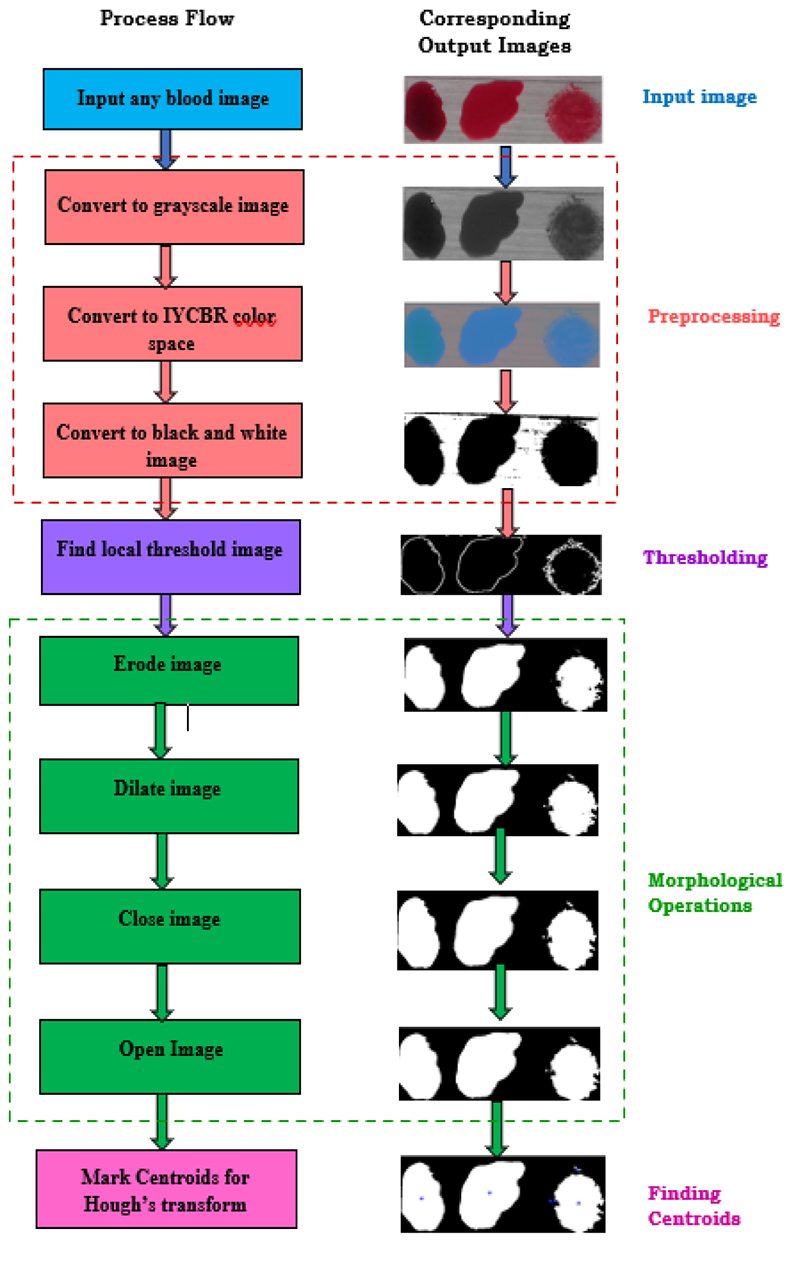
Figure 2. Process flow chart for finding the centroids in blood smear images for blood group identification
Adaptive Hough’s Transform
In computer vision and image analysis, the Hough Transform is an effective tool for identifying shapes in an image, especially ellipses, circles, and lines [ 18 ]. It creates parameter space by dividing the complex problem into a set of simpler problems to identify the exact shape. The features were found by mapping the points of the image space into the parameter space [ 19 ]. Hough’s Transform adopts the parametric representation of the line equation, in which n is the line’s slope, and z is its y-axis intercept. There are several problems with the above line equation, particularly when working with vertical lines where the slope m becomes infinite.
The mathematical formulation for the Adaptive Hough Transform typically follows the principles of the standard Hough Transform but adds an adaptive mechanism to optimize the process. For handling all possible lines, we use a different parameterization based on the polar coordinates [ 20 ]. The perpendicular distance between the line and the origin is denoted by ρ. In relation to the x-axis, θ is the angle formed by the normal, or perpendicular line, to the line. This polar form describes a line in the image space (a, b) using two parameters, ρ, and θ, rather than the slope and intercept. We can compute a range of potential lines that could pass through a given point in the image space by altering θ, and then calculate ρ for each θ [ 21 ]. In the ρ-θ parameter space, each of the image’s components (a1, b1) represents a sinusoidal curve. Each point on this curve represents a potential line that passes through (a1, b1) in the image space. Let H (ax, bx) be an accumulator array, and H(ax, bx)=0 for all (ax, bx). For each edge point (ai,bi,ϕi),
The ‘vote’ for all the possible (ρ,θ) pairs along this curve is found by incrementing the corresponding bins in an accumulator array.
Figure 3 shows the algorithm for separating antigens using Hough’s transform.
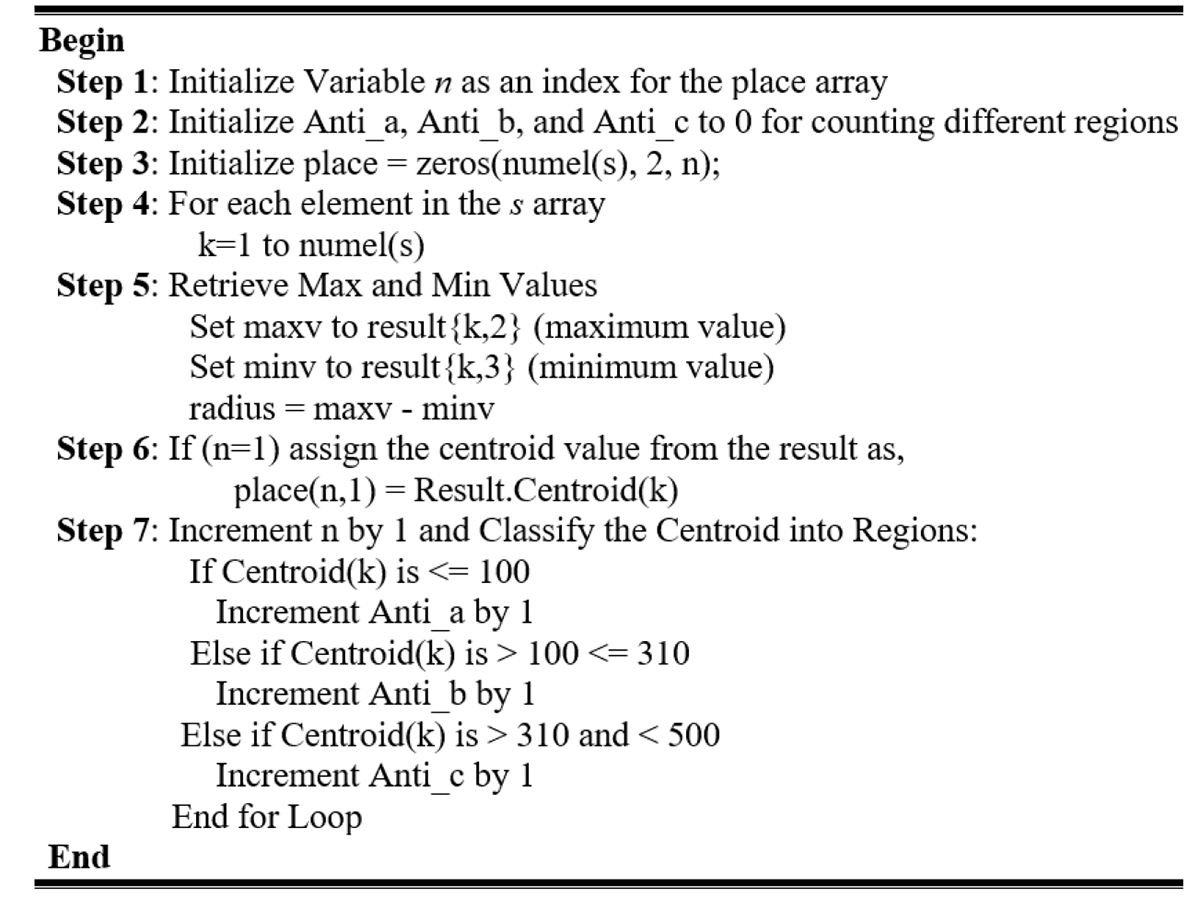
Figure 3. Algorithm for finding the centroids and Separating Antigens in blood smear images using Hough’s transform
After processing all edge points in the image, the accumulator will contain peaks at (ρ,θ) values, where many lines intersect, i.e., these peaks represent strong candidates for lines in the image [ 22 ]. After the voting procedure, the peaks in the accumulator array indicate the most likely parameters (ρ,θ) for the lines in the image. By detecting the peaks in the accumulator array that correspond to the most prominent lines. These peaks correspond to the strongest candidate lines, which can be extracted and drawn back onto the original image [ 23 ]. The maximum and minimum points were identified for separating antigens, and the centroid was identified from the calculated radius [ 24 ]. Table 1 shows the threshold levels for 8 different blood groups and the antigen values for determining the blood group. Figures 4 (a) and (b) show the model designed and fabricated at the Department of Production Technology, MIT Campus, Anna University for blood group identification.
| Blood Group | Threshold Level (ϕ) | Anti a | Anti b | Anti c |
|---|---|---|---|---|
| O Positive | 0.2981-0.7275 | 1 | 1 | >1 |
| AB Positive | 0.3294-0.5843 | >-1 | >1 | >1 |
| A Positive | 0.3255-0.5098 | >1 | 1 | >1 |
| B Positive | 0.3176-0.4706 | 1 | >1 | >1 |
| O Negative | 0.2902-0.5765 | 1 | 1 | 1 |
| AB Negative | 0.2511-0.5804 | >-1 | >0 | 1 |
| A Negative | 0.2902-0.8569 | >1 | 1 | 1 |
| B Negative | 0.3255-0.5882 | 1 | >1 | 1 |
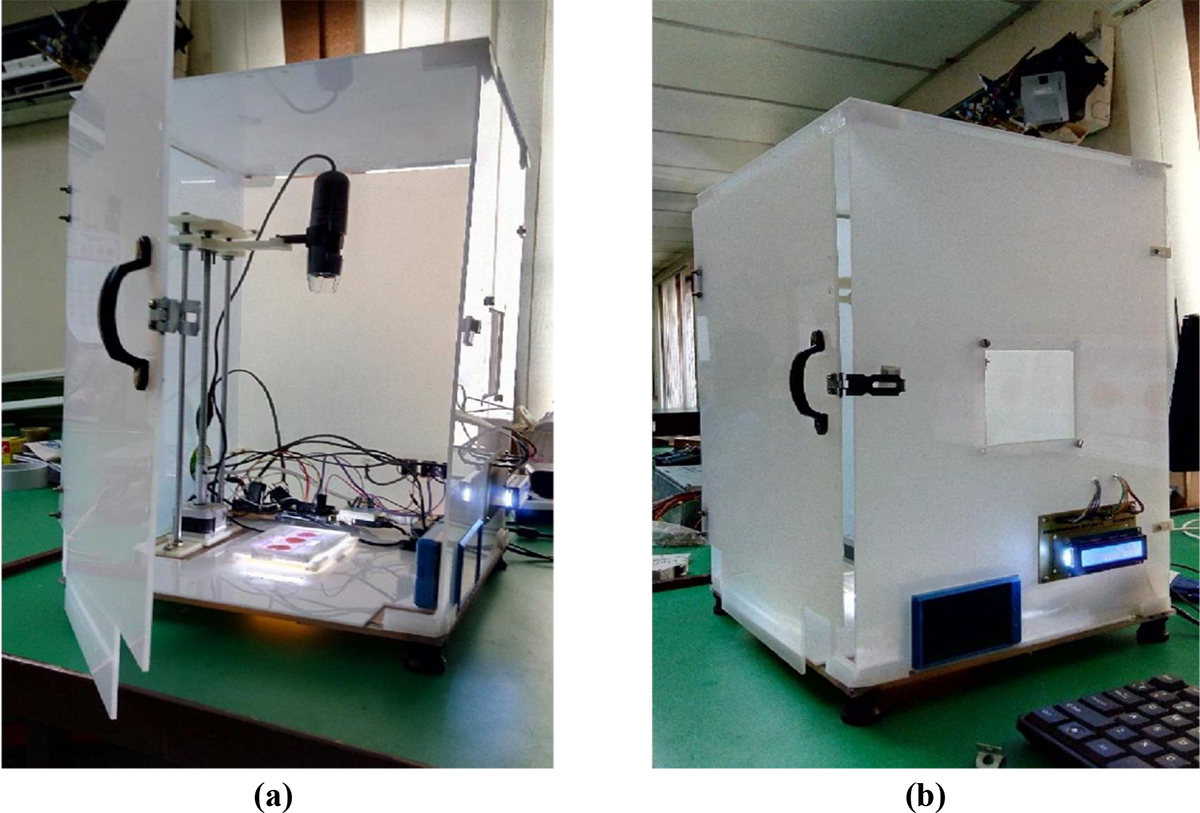
Figure 4. Fabricated device for blood sample analysis and identification of blood group from blood smear images (a) Experimental setup for blood group prediction from blood slides (b) LCD (Liquid Crystal Display) Display in the fabricated device showing the predicted blood group using Hogue’s transform.
Results
This section summarizes the system’s experimental results of the automated blood group identification system with the results of 303 participants. The provided values correspond to the results of analyzing 303 blood smear images after converting them to grayscale and applying a threshold of 0.5. Figures 5(a) and (b) show the scatter plot of the predicted blood groups from blood slides using a fabricated device. Figure 5(a) shows the scatter plot of detected blood groups and their corresponding calculated threshold level. Figure 5(b) shows the scatter plot of detected blood groups with Rh factor for the determined blood group and their calculated level of threshold for each blood group.
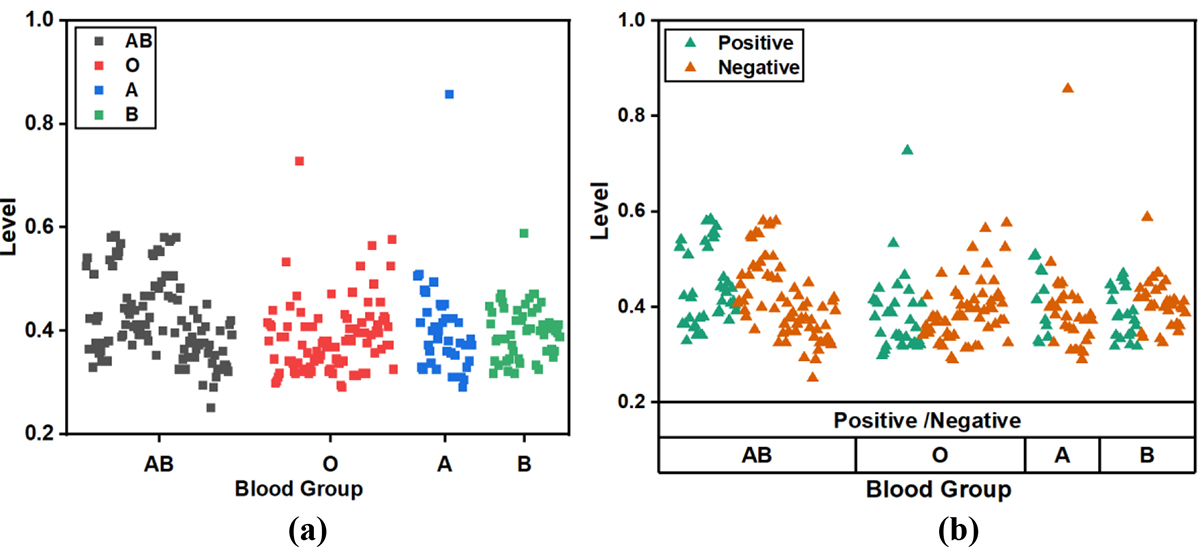
Figure 5. Scatter plot of calculated threshold level for 303 blood smear images (a) Identified blood group for the blood smear images and their corresponding threshold level (b) Rh factor for identified blood group with their threshold levels.
Figure 6 shows the distribution of antigen ‘a’, ‘b’ for blood group type and antigen ‘c’ for determining the Rh factor of the blood group. Figure 6(a) shows the kite plot of the antigens separately. From the kite plot, we infer the antigen ‘c’ value is standardized to zero for Rh negative, and Figure 6(b) shows the scatter plot of antigens a, b, and c for 303 blood smear images. The range of antigen ‘a’ is between 0 to 30, antigen ‘b’ is between 1 to 45, and antigen ‘c’ has a cluster of values between 1 to 10 and ranging up to 60.
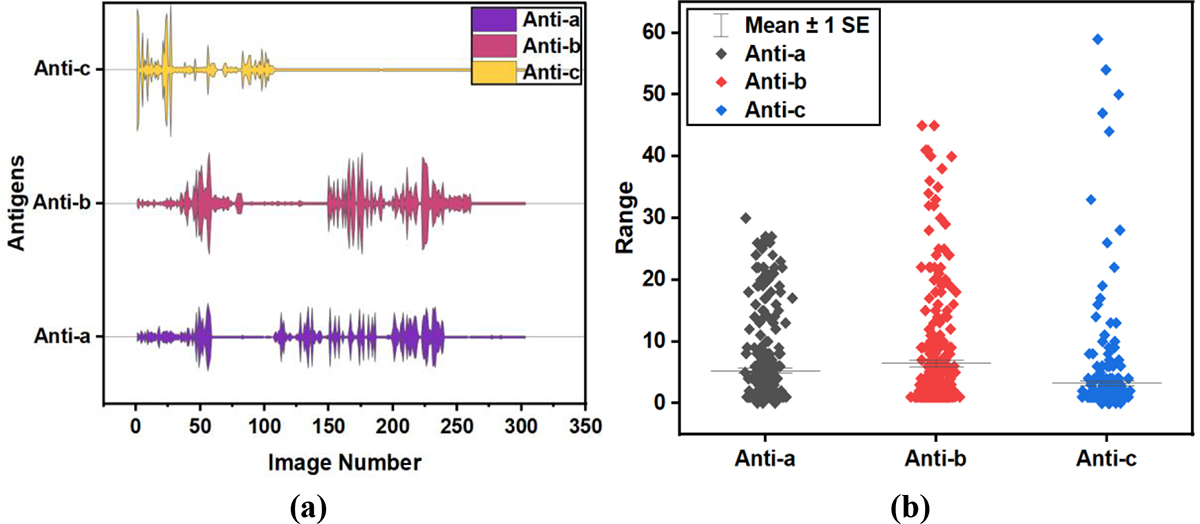
Figure 6. Antigen range distribution for input blood smear images (a) Kite plot separating Antigen a, b, and c (b) Scatter plot of images (mean ± standard error) after applying Antigen ‘a’, ‘b’ and ‘c.’
Discussion
The grayscale conversion simplifies the image data by reducing the colour information to a single intensity value for each pixel, which makes image analysis more efficient. Thresholding, in this case at 0.5, means that pixels with intensity values greater than 0.5 are considered foreground (e.g., part of a cell or region of interest), while those below are considered background. Only 5 participants have images with intensities below 0.3, indicating that these images are mostly dark or have low contrast. This could represent images, where little cellular material is visible, possibly due to poor staining, improper sample preparation, or a large amount of background with few distinguishable cells. A total of 158 participants has intensities between 0.3 to 0.4, suggesting that the majority of images have relatively low-intensity values, but are not completely dark. In blood smear analysis, this could indicate that while cells or regions of interest are visible, they may not be well-contrasted or well-separated from the background. A total of 100 participants have images with intensities between 0.4 to 0.5, indicating a moderate level of contrast, with better distinction between cells and background compared to the lower intensity range. These images likely show clearer cell structures, though they may still be somewhat dim. Also, 25 participants have intensities between 0.5 to 0.6, which suggests that only a small fraction of the images have high contrast or intensity, making the cells or regions of interest stand out clearly. Such images may be easier to analyze because of the distinct separation between cellular material and background. The majority of the participants fall within the threshold range between 0.3 to 0.6. Only 2 participants have threshold intensities above 0.6, representing their blood smear images are likely to be very bright, making the cellular details highly visible but potentially causing exaggeration or saturation.
Conclusion
Patient care and healthcare operations are being revolutionized by the IoT, which employs networked devices, sensors, and software to acquire, exchange, and analyze real-time health data. For safe blood transfusions, organ transplant compatibility, and immune reaction prevention, blood type determination is crucial. Research on the relationships between blood types and different medical illnesses, including coagulation disorders, cardiovascular diseases, and infection susceptibility, is also supported by blood group prediction. IoT-based automated blood group detection using image processing has the potential to streamline blood group analysis by minimizing time and reducing the risk of manual errors. Traditional blood group testing requires manual intervention, which can lead to human errors and inconsistencies, especially in high-pressure settings, such as emergency rooms or disaster relief areas. However, integrating IoT with automated image processing can change this by enabling remote, quick, and consistent blood analysis. The proposed device identifies the blood group using image processing techniques along with IoT devices by providing a very advanced and effective healthcare diagnostic system. Since it integrates the IoT, machine learning, and image processing to test blood samples rapidly and accurately, this approach could be essential in environments including homes, remote clinics, and hospitals. In the future, automated disease prediction could be incorporated for different diseases using blood samples.
Acknowledgment
We would like to thank the participants and clinicians of this study.
Authors’ Contribution
V. Asokan, V. Ponnu Swamy, and Sh. Baskaran conceived the idea, conducted data collection, designed the device, and drafted the manuscript. All the authors read, modified, and approved the final version of the manuscript.
Ethical Approval
All procedures performed in studies involving human participants were in accordance with the ethical standards of the institutional and/or national research committee and with the 1964 Helsinki declaration and its later amendments or comparable ethical standards.
Informed Consent
Informed consent was obtained from all individual participants included in the study.
Funding
There was no funding for this research.
Conflict of Interest
None
References
- Rejeb A, Rejeb K, Treiblmaier H, Appolloni A, Alghamdi S, Alhasawi Y, Iranmanesh M. The Internet of Things (IoT) in healthcare: Taking stock and moving forward. Internet of Things. 2023; 22:100721. DOI
- Boikanyo K, Zungeru AM, Sigweni B, Yahya A, Lebekwe C. Remote patient monitoring systems: Applications, architecture, and challenges. Scientific African. 2023; 20:e01638. DOI
- Li HY, Guo K. Blood group testing. Frontiers in Medicine. 2022; 9:827619. DOI
- Dean L, Dean L. Blood groups and red cell antigens. Bethesda: NCBI; 2005.
- Dong YF, Fu WW, Zhou Z, Chen N, Liu M, Chen S. ABO blood group detection based on image processing technology. In 2nd International Conference on Image, Vision and Computing (ICIVC); Chengdu: IEEE; 2017. p. 655-9.
- Deshpande NM, Gite S, Aluvalu R. A review of microscopic analysis of blood cells for disease detection with AI perspective. PeerJ Comput Sci. 2021; 7:e460. Publisher Full Text | DOI | PubMed [ PMC Free Article ]
- Mujahid A, Dickert FL. Blood Group Typing: From Classical Strategies to the Application of Synthetic Antibodies Generated by Molecular Imprinting. Sensors (Basel). 2015; 16(1):51. Publisher Full Text | DOI | PubMed [ PMC Free Article ]
- Ahmed I, Balestrieri E, Tudosa I, Lamonaca F. Segmentation techniques for morphometric measurements of blood cells: Overview and research challenges. Measurement: Sensors. 2022; 24:100430. DOI
- Tavakoli S, Ghaffari A, Kouzehkanan ZM, Hosseini R. New segmentation and feature extraction algorithm for classification of white blood cells in peripheral smear images. Sci Rep. 2021; 11(1):19428. Publisher Full Text | DOI | PubMed [ PMC Free Article ]
- Cheng W, Liu J, Wang C, Jiang R, Jiang M, Kong F. Application of image recognition technology in pathological diagnosis of blood smears. Clin Exp Med. 2024; 24(1):181. Publisher Full Text | DOI | PubMed [ PMC Free Article ]
- Mahmood MF. Recognition and categorization of blood groups by machine learning and image processing method. Innov Biosyst Bioeng. 2024; 8(2):53-68. DOI
- Chomean S, Ingkananth S, Kiatchaipar M, Kaset C. Portable paper-based device for ABO and RhD typing using smartphone interpretation: Optical answer sheet reading concept. Anal Chim Acta. 2021; 1180:338884. DOI | PubMed
- Mahmood MF, Jameel HF, Yaseen SM, Mohammed SL. Determination of Blood Groups Based on GUI of Matlab. In Fifth International Conference on Electrical, Computer and Communication Technologies (ICECCT); Erode, India: IEEE; 2023. p. 1-8.
- Rosales MA, De Luna RG. Computer-based blood type identification using image processing and machine learning algorithm. JACIII. 2022; 26(5):698-705. DOI
- Al-Momin M, Almomin A. A MATLAB model for diagnosing sickle cells and other blood abnormalities using image processing. IJECE. 2021; 11(6):5060. DOI
- Ferraz A, Moreira V, Silva D, Carvalho VH, Soares FO. Automatic System for Blood Type Classification using Image Processing Techniques. In Proceedings of the International Conference on Biomedical Electronics and Devices (BIODEVICES-2011); Science and Technology Publications; 2011. p. 368-73.
- Yamin A, Imran F, Akbar U, Tanvir SH. Image processing based detection and classification of blood group using color images. In International Conference on Communication, Computing and Digital Systems (C-CODE); Islamabad, Pakistan: IEEE; 2017. p. 293-8.
- Meng Y, Zhang Z, Yin H, Ma T. Automatic detection of particle size distribution by image analysis based on local adaptive canny edge detection and modified circular Hough transform. Micron. 2018; 106:34-41. DOI | PubMed
- Hassanein AS, Mohammad S, Sameer M, Ragab ME. A survey on Hough transform, theory, techniques and applications [Internet]. arXiv [Preprint]. 2015 [cited Feb Jun 2]. Available from: https://arxiv.org/abs/1502.02160
- Nagy S, Ismail R, Sziová B, Kóczy LT. On classical and fuzzy Hough transform in colonoscopy image processing. In IEEE AFRICON; Arusha, Tanzania, United Republic of: IEEE; 2021. p. 1-6.
- Kowdiki M, Khaparde A. Adaptive hough transform with optimized deep learning followed by dynamic time warping for hand gesture recognition. Multimed Tools Appl. 2022; 81(2):2095-126. DOI
- Elsalamony HA. Detecting distorted and benign blood cells using the Hough transform based on neural networks and decision trees. In: Emerging trends in image processing, computer vision and pattern recognition. Morgan Kaufmann, Boston; 2015. p. 457-73.
- Limberger FA, Oliveira MM. Real-time detection of planar regions in unorganized point clouds. Pattern Recognition. 2015; 48(6):2043-53. DOI
- Qasmieh IA, Alquran H, Alqudah AM. Occluded iris classification and segmentation using self-customized artificial intelligence models and iterative randomized Hough transform. IJECE. 2021; 11(5):4037. DOI


