Introduction
Multiple Sclerosis (MS) is a chronic, potentially debilitating neurological disease affecting the brain and spinal cord, causing diverse symptoms in visual, sensory, balance, and neuropsychiatric systems [ 1 ]. MS impacts over 2.8 million individuals, including 1 million in the United States, with a 2–3 times higher prevalence in women than men [ 1 , 2 ]. Typically diagnosed in young adults, MS can occur at any age, and its incidence is rising in regions, such as the Russian Federation, Canada, Australia, the Middle East, North Africa, and several European countries [ 1 ]. MS manifests in three primary forms: relapsing-remitting, primary progressive, and secondary progressive; with diagnosis relying on Magnetic Resonance Imaging (MRI) to detect characteristic lesions and the McDonald criteria to confirm lesion distribution in time and space [ 3 , 4 ]. This global burden and clinical complexity highlight the need to address MS’s complicated impacts.
On the other side of physical symptoms, depression is a prevalent and often overlooked comorbidity in MS, with significant implications for patient well-being [ 5 ]. Major depression affects up to 20% of MS patients, a rate higher than in healthy individuals or those with other chronic illnesses [ 6 ]. Despite its prevalence, depression frequently remains undiagnosed and untreated, worsening disability and reducing quality of life [ 7, 8 ]. The etiology of depression in MS is complex, involving biological factors (e.g., neuroinflammation), psychosocial stressors, and potentially medications like interferon beta [ 9-11 ]. Risk factors include female sex, age under 35, a family history of depression, and high anxiety or stress levels [ 12 ]. Since Charcot’s early observations, the psychiatric burden of MS has been recognized, yet it remains insufficiently addressed in clinical practice [ 5 ].
Based on this, MRI studies have shed light on the neurobiological basis of depression in MS, linking it to structural and functional brain changes. Research indicates associations between depression severity and lesions in right frontal and temporal regions, as well as reduced right temporal lobe volume, though correlations are modest (0.20-0.30) [ 13 ]. Structural damage, including frontal atrophy and white matter lesions, and functional disruptions, such as fronto-limbic disconnection, are more pronounced in depressed MS patients [ 14 , 15 ]. For instance, disruptions in the hippocampal–thalamic–prefrontal circuit have been noted in early Relapsing-Remitting Multiple Sclerosis (RRMS), impacting cognition and potentially mood [ 16 ]. However, findings vary, with some studies finding no link between depression and T2 lesions or enhancement, instead implicating cortical-subcortical disconnection from frontal and parietal white matter damage [ 15 , 17 ]. These insights suggest depression is not merely a consequence of neurological disability but a symptom rooted in neurobiological substrates [ 14 ].
Despite these advances, significant gaps persist in understanding the relationship between MRI findings and depression in MS. Various results across studies highlight the need for standardized approaches, while the absence of comprehensive research in the Middle East (where genetic, environmental, and healthcare factors may differ) limits region-specific insights [ 1 ]. Furthermore, RRMS, the most common subtype, offers a critical window to study early neurobiological changes, yet its depression correlates remain underexplored in this region. This highlights the urgency of investigating depression’s prevalence and neural basis in Middle Eastern MS populations.
Addressing these gaps, this study examines the prevalence of depression in Middle Eastern patients with RRMS, assessing disability patterns and exploring correlations with MRI findings, including lesion volume, newly developing lesions, and brain atrophy. By demonstrating these relationships, we aimed to clarify the neurobiological basis of depression in MS and inform targeted, region-specific interventions to improve mental health outcomes for this underserved population.
Material and Methods
Participants
This cross-sectional study was conducted on patients with clinically definite relapsing-remitting type of MS, who were referred to MS clinics at university-affiliated medical centers from June 2022 to June 2023. Inclusion criteria required participants to have undergone MRI scans with an MS protocol. Exclusion criteria ensured that participants were free from psychological and neurologic disorders before their MS diagnosis. Additionally, individuals with a family history of depression, any additional chronic diseases, and those consuming antipsychotic medications were excluded. Participants with a history of drug or alcohol abuse within the preceding 3 years were also excluded from the study. A total of 105 RRMS patients were included.
Assessment Methods
Data were systematically collected through a two-part checklist, integrating demographics (i.e., age, sex, marital status (single, married widow, and divorced,), occupation (employed, non-employed, and retired), socioeconomic status (high, moderate, and low), and ethnicity) and clinical information (i.e., such as degree of disability, duration of disease, medication details (a comprehensive record of all prescribed medications and duration of consumption), and depression assessment).
Expanded Disability Status Scale (EDSS)
Patients were subjected to a comprehensive assessment protocol, including the application of the EDSS [ 18 ] by a specialized neurologist. The EDSS evaluates impairment across eight body systems, prioritizing ambulation and neurological functions. A neurologist conducted the assessment, assigning scores ranging from 0 (no symptoms) to 10 (death from MS), with each 0.5-unit increase signifying a higher disability level.
The EDSS assessment included the evaluation of visual, pyramidal, cerebellar, brainstem, sensory, bladder, and mental functions. Specific scoring criteria were as follows: scores 1-4 (participants with the ability to walk unrestrictedly or without limitation (more than 500 meters), indicative of low disability levels), scores 4.5-5.5 (individuals able to walk less than 500 meters without assistance, reflecting moderate disability levels), and scores 6-6.5 (participants requiring unilateral or bilateral assistance for walking).
This non-linear scoring system places significant emphasis on walking ability, particularly from score 4 onwards. The assessment was conducted as part of a comprehensive neurologic examination to provide an objective and standardized measure of disability.
Beck Depression Inventory (BDI)
Concurrently, a psychologist administered the BDI [ 19 ] to evaluate depression frequency and severity in the study. The BDI is a widely recognized self-report rating inventory consisting of 21 items. Each item is designed to measure characteristic attitudes and symptoms associated with depression. Respondents provide answers on a scale ranging from 0 to 3 for each item, with higher scores indicative of more severe depressive symptoms. The standard cut-off scores for the BDI are as follows: 1-10 (normal), 11-16 (Mild mood disturbance), 17-20 (Borderline clinical depression), 21-30 (Moderate depression), 31-40 (Severe depression), and over 40 (Extreme depression). For this study, a BDI score of ≥17 was used to classify participants as ‘depressed’ for group comparisons.
These cut-off scores serve as a guideline for categorizing the severity of depressive symptoms reported by individuals. The interpretation facilitates a clinically relevant understanding of the participant’s mental health, aiding in the identification of the intensity of depressive symptoms and informing appropriate interventions or further assessments.
MRI Acquisition
All participants underwent imaging procedures utilizing a 1.5-Tesla whole-body MRI system (Siemens Magnetom Amira, X12th version, Germany) equipped with a 16-channel phased-array head coil. The imaging protocol included the following sequences:
Three-dimensional T1-Weighted Magnetization Prepared Rapid Acquisition Gradient-Echo (MPRAGE) Sequence (Repetition Time (TR): 450 ms, Echo Time (TE): 24 ms, Flip Angle (FA): 120 degrees, Field of View (FOV): 160×250 mm, Slice Thickness: 0.98 mm). This sequence was employed for brain volume measurements, providing detailed anatomical information.
Three-Dimensional Fluid Attenuated Inversion Recovery (FLAIR) Sequence (TR: 8000 ms, TE: 429 ms, FA: 120 degrees, FOV: 160×250 mm, Slice Thickness: 0.98 mm). The FLAIR sequence was used for the detection of white matter lesions (WM lesions), offering insights into potential pathological changes.
MRI data were converted from DICOM to NIfTI format using dcm2niix (version 1.0.20211006), a widely used open-source tool for converting neuroimaging data, ensuring compatibility with the VolBrain analysis pipeline. MRI findings were analyzed by a radiologist using an MS protocol, encompassing the identification of new lesions, enhancing plaques, and cord involvement.
Volumetric measures
To assess brain lobe volume, lesion burden, lesion locations, and atrophic changes, the LesionBrain pipeline of VolBrain, an online MRI brain volumetry system (available at https://www.volbrain.net/), was used, incorporating Non-local Intracranial Cavity Extraction (NICE), tissue classification, Non-local Hemisphere Segmentation (NABS), and non-local subcortical structure segmentation (Figures 1 and 2). The LesionBrain pipeline provides unitless plaque burden values based on lesion volume relative to brain anatomy, as reported in the results. This software uses non-local label fusion technology to segment all brain structures and lesions. Some pre-processing steps, such as denoising, inhomogeneity correction, registration to Montral Neurological Institue (MNI) space, and intensity normalization, are performed on the MRI images. The VolBrain can perform NICE, tissue classification, non-local NABS, and non-local subcortical structure segmentation.
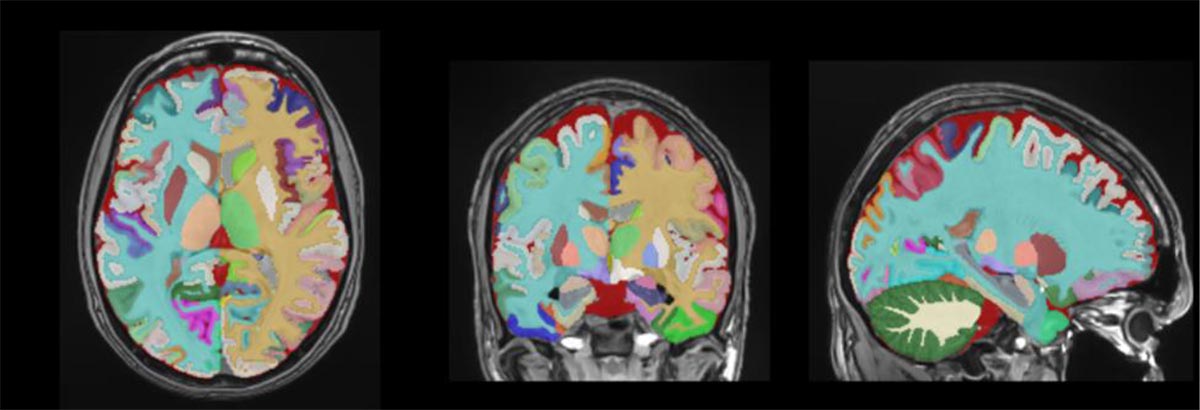
Figure 1. VolBrain segmentation illustrating automated delineation of brain structures in Relapsing-Remitting Multiple Sclerosis (RRMS) patients, highlighting regional anatomy for volumetric analysis.
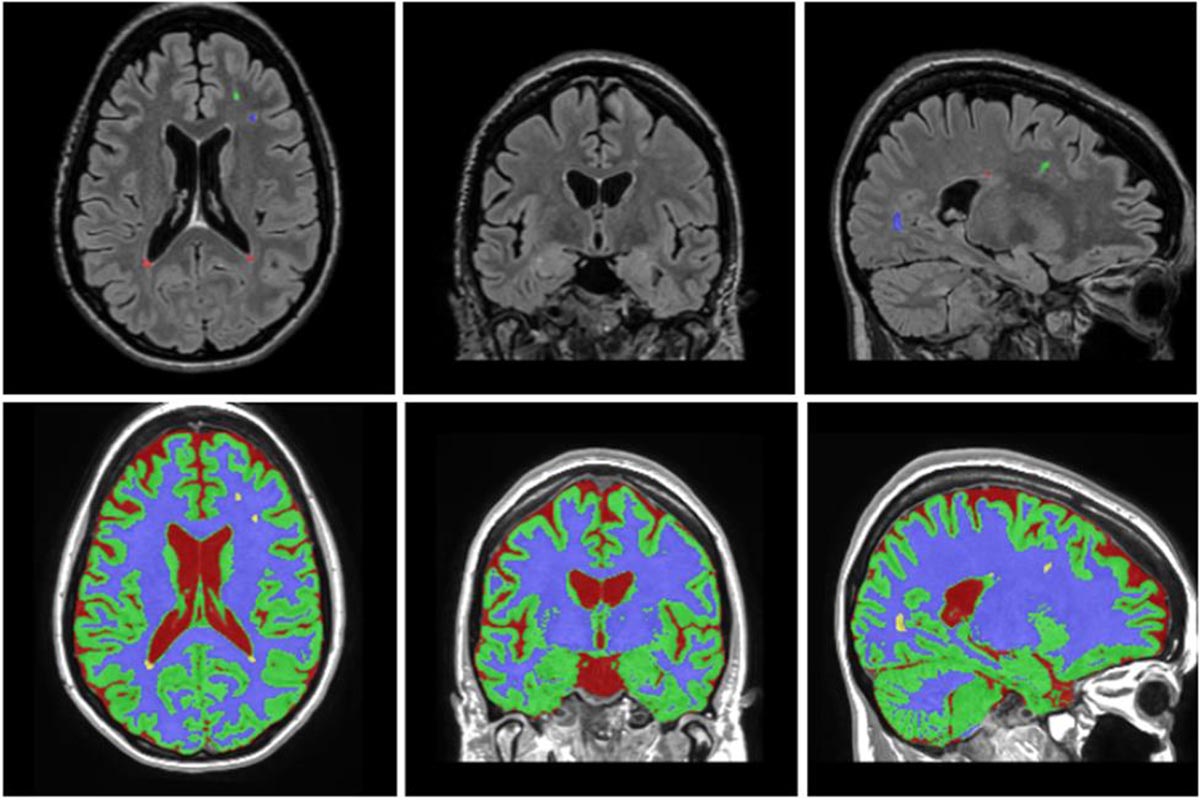
Figure 2.Upper row: Lesion segmentation by VolBrain showing white matter plaque distribution in Relapsing-Remitting Multiple Sclerosis (RRMS) patients; Lower row: Tissue classification identifying gray and white matter regions.
Statistical analyses
Statistical analyses were conducted using IBM SPSS Statistics version 22. Both parametric and nonparametric data were summarized using frequency, mean, median, and range. Before inferential analyses, the normality of data distribution was assessed using the Kolmogorov–Smirnov test.
Group comparisons were performed using independent t-tests for clinical variables, such as total lesion burden, lesion burden in different locations, age, and duration of disease between depressed and non-depressed patients. Categorical variables, including gender distribution, atrophic changes, cord involvement, new lesions, any enhancing lesion, and EDSS, were analyzed using the chi-squared test for comparison between depressed and non-depressed patients. Additionally, a chi-squared test was employed to evaluate the comparison of depression frequencies between MS patients and healthy controls.
A significance level of P-value<0.05 was considered for statistical significance, while a P-value less than 0.10 was deemed indicative of a trend towards significance.
Results
In this cross-sectional study, 105 patients with RRMS (mean age = 36.2±13.9 years, 83.8% female) and 111 healthy controls (mean age = 39.1±10.9 years, 74.8% female) were assessed. No statistically significant differences were observed in age (P-value=0.06), sex (P-value=0.72), or marital status (P-value=0.50).
Most participants resided in Shiraz, but RRMS patients were more likely to live in villages within Fars province (P-value=0.04). Occupationally, housewives predominated among RRMS patients, whereas government employees were more common in controls. The majority of both groups reported moderate socioeconomic status, with no differences between RRMS patients and controls (P-value=0.90; Tables 1-5).
| Marital Status | |||
|---|---|---|---|
| Group | Subgroup | Frequency | Percent |
| Control | Single | 38 | 34.2 |
| Married | 68 | 61.3 | |
| Divorced | 3 | 2.7 | |
| Widowed | 2 | 1.8 | |
| Total | 111 | 100.0 | |
| Case | Single | 30 | 28.6 |
| Married | 68 | 64.8 | |
| Divorced | 4 | 3.8 | |
| Widowed | 3 | 2.9 | |
| Total | 105 | 100.0 | |
| Occupation Status | |||
|---|---|---|---|
| Group | Subgroup | Frequency | Percent |
| Control | Government employee | 35 | 31.5 |
| Self-employed | 24 | 21.6 | |
| Retired | 8 | 7.2 | |
| Housewife | 29 | 26.1 | |
| Unemployed | 15 | 13.5 | |
| Total | 111 | 100.0 | |
| Case | Government employee | 6 | 5.7 |
| Self-employed | 25 | 23.8 | |
| Retired | 3 | 2.9 | |
| Housewife | 54 | 51.4 | |
| Unemployed | 17 | 16.2 | |
| Total | 105 | 100.0 | |
| Residency Status | |||
|---|---|---|---|
| Group | Subgroup | Frequency | Percent |
| Control | Shiraz | 95 | 85.6 |
| Fars county | 9 | 8.1 | |
| Fars villages | 3 | 2.7 | |
| Other states | 4 | 3.6 | |
| Total | 111 | 100.0 | |
| Case | Shiraz | 67 | 63.8 |
| Fars county | 19 | 18.1 | |
| Fars villages | 12 | 11.4 | |
| Other states | 7 | 6.7 | |
| Total | 105 | 100.0 | |
| Socioeconomic Status | |||
|---|---|---|---|
| Group | Subgroup | Frequency | Percent |
| Control | Low | 30 | 27.0 |
| Moderate | 67 | 60.4 | |
| High | 14 | 12.6 | |
| Total | 111 | 100.0 | |
| Case | Low | 19 | 18.1 |
| Moderate | 80 | 76.2 | |
| High | 6 | 5.7 | |
| Total | 105 | 100.0 | |
| Depression Status | |||
|---|---|---|---|
| Group | Subgroup | Frequency | Percent |
| Control | Non-depressed | 84 | 75.5 |
| Depressed | 27 | 24.5 | |
| Total | 111 | 100.0 | |
| Case | Non-depressed | 70 | 66.7 |
| Depressed | 35 | 33.3 | |
| Total | 105 | 100.0 | |
| Note: Depression status was determined using the Beck Depression Inventory (BDI) with a cut-off score of ≥17, indicating borderline clinical depression or higher. | |||
Regarding psychiatric outcomes, depression was more prevalent among females (P-value=0.02) and trended toward significance in younger individuals (P-value=0.06). Using the BDI, 35 RRMS patients (33.3%) met depression criteria compared to 27 controls (24.5%), though this difference was not statistically significant (P-value=0.15; Tables 1-5). Within the RRMS group, depressed patients (n=35) had a mean disease duration of 5.5 years versus 6.5 years in non-depressed patients (n=70; P-value=0.78). The mean EDSS score was 1.4 in depressed patients and 1.3 in non-depressed patients (P-value=0.70). No differences were found in age (35.3 vs. 36.6 years, P-value=0.50) or marital status (P-value=0.60) between depressed and non-depressed RRMS patients. However, self-employed individuals were 5.2 times more common in the non-depressed group, while housewives predominated in the depressed group.
Turning to neuroimaging, MRI revealed a non-random lesion distribution in RRMS patients, with parietal regions showing the highest plaque burden (mean 2.68), followed by frontal lobes (mean 1.06; Table 6). Plaque volumes were higher in depressed versus non-depressed RRMS patients across bilateral frontal, parietal, temporal, occipital, insular, and limbic lobes. Significant differences were observed for left limbic plaque burden and volume (P-value=0.05) and total insular cortex plaque volume (P-value=0.05), with non-significant trends elsewhere (P-value=0.07–0.90). Weak positive correlations were found between BDI scores and plaque volume in the left insular cortex (r=0.20, P-value=0.03) and total insular cortex (r=0.19, P-value=0.04). New lesions (P-value=0.60), enhancing lesions (P-value=0.60), cord involvement (P-value=0.40), and atrophy (P-value=0.30) were more frequent in depressed patients but not significantly. Depressed patients exhibited reduced brain volume compared to non-depressed patients, approaching significance (P-value=0.09).
| Region | Hemisphere | Mean Plaque Burden |
|---|---|---|
| Frontal | Right | 0.76 |
| Left | 1.37 | |
| Total | 1.06 | |
| Parietal | Right | 3.10 |
| Left | 2.26 | |
| Total | 2.68 | |
| Temporal | Right | 0.93 |
| Left | 0.83 | |
| Total | 0.88 | |
| Occipital | Right | 0.57 |
| Left | 0.57 | |
| Total | 0.57 | |
| Limbic | Right | 0.23 |
| Left | 0.31 | |
| Total | 0.27 | |
| Insular | Right | 0.18 |
| Left | 0.18 | |
| Total | 0.18 | |
| Total Burden | 5.64 | |
| Note: Mean plaque burden is a unitless measure derived from VolBrain’s LesionBrain pipeline, which quantifies lesion volume through automated segmentation of white matter lesions in Fluid Attenuated Inversion Recovery (FLAIR) images. Total burden (5.64) represents the sum of mean burdens across all regions. | ||
Table 7 summarizes the comparison of lesion burdens and brain volume between depressed and non-depressed RRMS patients, highlighting significant differences in left limbic and total insular cortex plaque burdens (P-value=0.05).
| Region | Hemisphere | Mean Plaque Burden (Depressed) | Mean Plaque Burden (Non-Depressed) | P-value | BDI Correlation (r, P-value) |
|---|---|---|---|---|---|
| Frontal | Right | 0.82 | 0.73 | 0.45 | 0.15, 0.12 |
| Left | 1.45 | 1.32 | 0.38 | 0.14, 0.15 | |
| Total | 1.13 | 1.02 | 0.40 | 0.14, 0.14 | |
| Parietal | Right | 3.25 | 3.00 | 0.30 | 0.16, 0.10 |
| Left | 2.35 | 2.20 | 0.35 | 0.15, 0.11 | |
| Total | 2.80 | 2.60 | 0.32 | 0.16, 0.10 | |
| Temporal | Right | 0.98 | 0.90 | 0.50 | 0.13, 0.18 |
| Left | 0.88 | 0.80 | 0.48 | 0.12, 0.20 | |
| Total | 0.93 | 0.85 | 0.49 | 0.12, 0.19 | |
| Occipital | Right | 0.60 | 0.55 | 0.60 | 0.10, 0.30 |
| Left | 0.62 | 0.54 | 0.58 | 0.10, 0.29 | |
| Total | 0.61 | 0.54 | 0.59 | 0.10, 0.30 | |
| Limbic | Right | 0.25 | 0.22 | 0.07 | 0.18, 0.06 |
| Left | 0.35 | 0.28 | 0.05 | 0.20, 0.03 | |
| Total | 0.30 | 0.25 | 0.06 | 0.19, 0.04 | |
| Insular | Right | 0.20 | 0.17 | 0.08 | 0.19, 0.04 |
| Left | 0.20 | 0.17 | 0.08 | 0.20, 0.03 | |
| Total | 0.20 | 0.17 | 0.05 | 0.19, 0.04 | |
| Total Burden | 5.97 | 5.43 | 0.20 | 0.17, 0.08 | |
| Brain Volume (cm³) | 1450.2 | 1475.8 | 0.09 | -0.18, 0.06 | |
| Note: Mean plaque burden is a unitless measure derived from VolBrain’s LesionBrain pipeline. Brain volume is reported in cubic centimeters (cm³). Beck Depression Inventory (BDI) correlations reflect associations with depression severity scores. | |||||
To address disability, EDSS scores showed a slight positive correlation with plaque volume in the right insular cortex (r=0.20, P-value=0.03), but no correlations emerged with plaque volumes or atrophic changes in other brain lobes (P-value>0.05). The low mean EDSS scores (1.3–1.4) reflect mild disability in this RRMS cohort, consistent with early disease stages (mean duration 5.5–6.5 years). No significant differences in clinical or demographic factors (e.g., disease duration, age) were found between depressed and non-depressed RRMS patients, highlighting the prominence of depression even in minimally disabled patients.
Discussion
MS is a prevalent neurological condition with significant global impact, particularly in RRMS, the focus of this cross-sectional study conducted in the Middle East. Our cohort of 105 RRMS patients had a mean age of 36.2 years, consistent with Sundgren et al. [ 20 ] but older than the 30.4 years reported by Aziz et al. [ 21 ], likely due to sampling differences. A striking female-to-male ratio of 5:1 was observed, higher than the 4:1 typical in global studies [ 10 ] and the 1.14 reported by Aziz et al. [ 21 ] This aligns with the increasing incidence of MS in females, potentially driven by environmental, genetic, socioeconomic, and autoimmune factors, as females exhibit stronger immune responses in autoimmune diseases [ 22 ]. Unlike Galeazzi et al. [ 23 ], who noted a predominance of married MS patients, our study found no differences in marital status between RRMS patients and healthy controls. Employment patterns revealed that most MS patients were housewives, with self-employed individuals 5.2 times more common in the non-depressed group, consistent with reports of high unemployment (22-80%) in MS due to fatigue and motor/cognitive impairments [ 24 , 25 ].
Turning to psychiatric comorbidities [ 26 ], depression is a significant burden in MS, with global prevalence in MS patients (27%) exceeding that in the general population (5%) [ 27 , 28 ]. In Iran, depression affects 8-20% of the general population and up to 47% of MS patients [ 29 , 30 ]. Our study found a depression prevalence of 33% in RRMS patients compared to 24% in healthy controls, less pronounced than in studies by Galeazzi et al. [ 23 ], Sundgren et al. [ 20 ], Feinstein et al. [ 9 ], Siegert et al. [ 11 ], Silveria et al. [ 31 ], and Skokou et al. [ 27 ], possibly due to the exclusion of progressive MS and Iran’s increased baseline depression rates. Depression was more frequent in younger female RRMS patients, aligning with risk factors like female sex and age, whereas Mohammadi et al. [ 32 ] found no notable variance in female age.
Based on these findings, our MRI analyses revealed a non-random lesion distribution in RRMS, with frontal and parietal regions accounting for approximately half of the total lesion volume, consistent with Sperling et al. [ 33 ], though they emphasized frontal predominance. A weak positive correlation (r=0.2, P-value=0.03) was observed between EDSS scores and plaque volume in the right insular cortex, but no correlations emerged with other brain lobes or atrophy, aligning with a Dutch study showing no link between initial depression and disability progression [ 34 ]. However, Binzer et al. [ 35 ] reported higher EDSS scores in MS patients with mood disorders. Depressed patients exhibited higher plaque volumes on FLAIR images, particularly in the left limbic area and insular cortex (r=0.19-0.2).
Despite these contributions, our study addresses critical gaps in understanding depression in Middle Eastern RRMS patients, where genetic, environmental, and healthcare factors may differ. The 33% depression prevalence in our cohort, though lower than Iran’s 47% MS average [ 29 ], highlights the need for region-specific data, as global estimates (27%) may not fully apply [ 28 ]. The focus on RRMS, with a mean EDSS of 1.35, likely contributed to milder depressive symptoms, limiting generalizability to progressive MS. The lack of significant differences in most MRI findings (e.g., atrophy) may reflect the mild depression severity and small sample size (n=105), necessitating larger studies. Methodological challenges, such as assuming depression stems from uniform lesion locations, have historically produced inconsistent results [ 36 ]. Our findings support a network-based model of depression, with lesion burdens in limbic and insular regions suggesting dysconnectivity in affective networks [ 37 ]. The absence of progressive MS patients and strict exclusion criteria (e.g., family history of depression) further distinguishes our study, filling a gap in Middle Eastern RRMS research.
Conclusion
In conclusion, depression is more prevalent in RRMS patients (33%) than healthy controls (24%), even in those with minimal disability (mean EDSS 1.35), though symptoms are generally mild. Depressed patients exhibit greater white matter plaque burden, particularly in the left limbic lobe and insular cortex, and reduced brain volume, though atrophy differences were not statistically significant. These findings underscore the neurobiological basis of depression in MS, driven by network dysconnectivity rather than isolated lesions. Clinically, routine depression screening in RRMS patients, especially younger females and unemployed individuals, is warranted to improve quality of life. Regionally, our study highlights the need for tailored mental health interventions in the Middle East, where depression prevalence may be increased. Future research should include larger, longitudinal cohorts incorporating progressive MS, advanced imaging (e.g., functional MRI), and network connectivity analyses to clarify depression’s pathophysiology. Exploring environmental and cultural factors in the Middle East could further refine MS management strategies.
Acknowledgment
We thank the Vice-Chancellor of Research at Shiraz University of Medical Sciences for support.
Authors’ Contribution
The study was designed and conceptualized by A. Salehi and P. Pishdad. Data analysis and interpretation were performed by P. Pishdad, B. Zeinali-Rafsanjani, and M. Poursadeghfard. The initial draft of the manuscript was prepared by P. Pishdad, M. Kalaee, and J. Ostovarfar. Critical revision of the manuscript for important intellectual content was carried out by P. Pishdad, B. Zeinali-Rafsanjani, and M. Poursadeghfard. Statistical analyses were conducted by A. Salehi. All authors read, revised, and approved the final version of the manuscript.
Ethical Approval
The present study was approved by the Ethics Committee of Shiraz University of Medical Sciences and the Institutional Review Board (IR.SUMS.MED.REC.1402.207), ensuring adherence to ethical standards in research involving human subjects. Written consent was obtained from the patients after explaining the aim and procedures of the study.
Informed Consent
Written informed consent was obtained from all participants following a detailed explanation of the study’s objectives, procedures, potential risks, benefits, and their rights, including confidentiality and the option to withdraw at any time.
Funding
Not applicable
Conflict of Interest
None
Data Availability Statement
The data supporting the findings of this study will be made available upon reasonable request from the corresponding author. Requests should be directed to Alireza Salehi at salehialireza45@yahoo.com.
References
- Paparrigopoulos T, Ferentinos P, Kouzoupis A, Koutsis G, Papadimitriou GN. The neuropsychiatry of multiple sclerosis: focus on disorders of mood, affect and behaviour. Int Rev Psychiatry. 2010; 22(1):14-21. DOI | PubMed
- Mirmosayyeb O, Shaygannejad V, Bagherieh S, Hosseinabadi AM, Ghajarzadeh M. Prevalence of multiple sclerosis (MS) in Iran: a systematic review and meta-analysis. Neurol Sci. 2022; 43(1):233-41. DOI | PubMed
- Marzullo A, Kocevar G, Stamile C, Durand-Dubief F, Terracina G, Calimeri F, Sappey-Marinier D. Classification of Multiple Sclerosis Clinical Profiles via Graph Convolutional Neural Networks. Front Neurosci. 2019; 13:594. Publisher Full Text | DOI | PubMed [ PMC Free Article ]
- Kamińska J, Koper OM, Piechal K, Kemona H. Multiple sclerosis - etiology and diagnostic potential. Postepy Hig Med Dosw (Online). 2017; 71:551-63. DOI | PubMed
- Butler MA, Bennett TL. In search of a conceptualization of multiple sclerosis: a historical perspective. Neuropsychol Rev. 2003; 13(2):93-112. DOI | PubMed
- Goldman Consensus Group. The Goldman Consensus statement on depression in multiple sclerosis. Mult Scler. 2005; 11(3):328-37. DOI | PubMed
- Marrie RA, Horwitz R, Cutter G, Tyry T, Campagnolo D, Vollmer T. The burden of mental comorbidity in multiple sclerosis: frequent, underdiagnosed, and undertreated. Mult Scler. 2009; 15(3):385-92. DOI | PubMed
- Tremlett HL, Luscombe DK, Wiles CM. Prescribing for multiple sclerosis patients in general practice: a case-control study. J Clin Pharm Ther. 2001; 26(6):437-44. DOI | PubMed
- Feinstein A. Multiple sclerosis and depression. Mult Scler. 2011; 17(11):1276-81. DOI | PubMed
- Jacobs LD, Beck RW, Simon JH, Kinkel RP, Brownscheidle CM, Murray TJ, et al. Intramuscular interferon beta-1a therapy initiated during a first demyelinating event in multiple sclerosis. CHAMPS Study Group. N Engl J Med. 2000; 343(13):898-904. DOI | PubMed
- Siegert RJ, Abernethy DA. Depression in multiple sclerosis: a review. J Neurol Neurosurg Psychiatry. 2005; 76(4):469-75. Publisher Full Text | DOI | PubMed [ PMC Free Article ]
- Patten SB, Metz LM, Reimer MA. Biopsychosocial correlates of lifetime major depression in a multiple sclerosis population. Mult Scler. 2000; 6(2):115-20. DOI | PubMed
- Zorzon M, De Masi R, Nasuelli D, Ukmar M, Mucelli RP, Cazzato G, et al. Depression and anxiety in multiple sclerosis. A clinical and MRI study in 95 subjects. J Neurol. 2001; 248(5):416-21. DOI | PubMed
- Masuccio FG, Gamberini G, Calabrese M, Solaro C. Imaging and depression in multiple sclerosis: a historical perspective. Neurol Sci. 2021; 42(3):835-45. DOI | PubMed
- Bakshi R, Czarnecki D, Shaikh ZA, Priore RL, Janardhan V, Kaliszky Z, Kinkel PR. Brain MRI lesions and atrophy are related to depression in multiple sclerosis. Neuroreport. 2000; 11(6):1153-8. DOI | PubMed
- Kern KC, Gold SM, Lee B, Montag M, Horsfall J, O’Connor MF, Sicotte NL. Thalamic-hippocampal-prefrontal disruption in relapsing-remitting multiple sclerosis. Neuroimage Clin. 2014; 8:440-7. Publisher Full Text | DOI | PubMed [ PMC Free Article ]
- Van Geest Q, Boeschoten RE, Keijzer MJ, Steenwijk MD, Pouwels PJ, Twisk JW, et al. Fronto-limbic disconnection in patients with multiple sclerosis and depression. Mult Scler. 2019; 25(5):715-26. DOI
- Kurtzke JF. Rating neurologic impairment in multiple sclerosis: an expanded disability status scale (EDSS). Neurology. 1983; 33(11):1444-52. DOI | PubMed
- Beck AT, Steer RA, Carbin MG. Psychometric properties of the Beck Depression Inventory: Twenty-five years of evaluation. Clinical Psychology Review. 1988; 8(1):77-100. DOI
- Sundgren M, Maurex L, Wahlin Å, Piehl F, Brismar T. Cognitive impairment has a strong relation to nonsomatic symptoms of depression in relapsing-remitting multiple sclerosis. Arch Clin Neuropsychol. 2013; 28(2):144-55. DOI | PubMed
- Aziz Y, Aboelez W, El-Mitwalli A, Bahaey W. Depression and unexplained somatic symptoms in multiple sclerosis: MRI and quality of life correlates. Egypt J Psychiatry. 2018; 39(3):133.
- Coyle PK. What Can We Learn from Sex Differences in MS? J Pers Med. 2021; 11(10):1006. Publisher Full Text | DOI | PubMed [ PMC Free Article ]
- Galeazzi GM, Ferrari S, Giaroli G, Mackinnon A, Merelli E, Motti L, Rigatelli M. Psychiatric disorders and depression in multiple sclerosis outpatients: impact of disability and interferon beta therapy. Neurol Sci. 2005; 26(4):255-62. DOI | PubMed
- Busche KD, Fisk JD, Murray TJ, Metz LM. Short term predictors of unemployment in multiple sclerosis patients. Can J Neurol Sci. 2003; 30(2):137-42. DOI | PubMed
- Cadden M, Arnett P. Factors Associated with Employment Status in Individuals with Multiple Sclerosis. Int J MS Care. 2015; 17(6):284-91. Publisher Full Text | DOI | PubMed [ PMC Free Article ]
- Marrie RA, Patten SB, Greenfield J, Svenson LW, Jette N, Tremlett H, et al. Physical comorbidities increase the risk of psychiatric comorbidity in multiple sclerosis. Brain Behav. 2016; 6(9):e00493. Publisher Full Text | DOI | PubMed [ PMC Free Article ]
- Skokou M, Soubasi E, Gourzis P. Depression in multiple sclerosis: a review of assessment and treatment approaches in adult and pediatric populations. ISRN Neurol. 2012; 2012:427102. Publisher Full Text | DOI | PubMed [ PMC Free Article ]
- Peres DS, Rodrigues P, Viero FT, Frare JM, Kudsi SQ, Meira GM, Trevisan G. Prevalence of depression and anxiety in the different clinical forms of multiple sclerosis and associations with disability: A systematic review and meta-analysis. Brain Behav Immun Health. 2022; 24:100484. Publisher Full Text | DOI | PubMed [ PMC Free Article ]
- Shafiee A, Soltani H, Teymouri Athar MM, Jafarabady K, Mardi P. The prevalence of depression and anxiety among Iranian people with multiple sclerosis: A systematic review and meta-analysis. Mult Scler Relat Disord. 2023; 78:104922. DOI | PubMed
- Tahan M, Saleem T, Zygoulis P, Pires LVL, Pakdaman M, Taheri H, Ebrahimpour M. A systematic review of prevalence of Depression in Iranian patients. Neuropsychopharmacol Hung. 2020; 22(1):16-22. PubMed
- Silveira C, Guedes R, Maia D, Curral R, Coelho R. Neuropsychiatric Symptoms of Multiple Sclerosis: State of the Art. Psychiatry Investig. 2019; 16(12):877-88. Publisher Full Text | DOI | PubMed [ PMC Free Article ]
- Mohammadi K, Rahnama P, Montazeri A. Prevalence and risk factors for depression in women with multiple sclerosis: a study from Iran. Ann Gen Psychiatry. 2015; 14:29. Publisher Full Text | DOI | PubMed [ PMC Free Article ]
- Sperling RA, Guttmann CR, Hohol MJ, Warfield SK, Jakab M, Parente M, et al. Regional magnetic resonance imaging lesion burden and cognitive function in multiple sclerosis: a longitudinal study. Arch Neurol. 2001; 58(1):115-21. DOI | PubMed
- Koch M, Uyttenboogaart M, Van Harten A, Heerings M, De Keyser J. Fatigue, depression and progression in multiple sclerosis. Mult Scler. 2008; 14(6):815-22. DOI | PubMed
- Binzer S, McKay KA, Brenner P, Hillert J, Manouchehrinia A. Disability worsening among persons with multiple sclerosis and depression: A Swedish cohort study. Neurology. 2019; 93(24):e2216-23. Publisher Full Text | DOI | PubMed [ PMC Free Article ]
- Li BJ, Friston K, Mody M, Wang HN, Lu HB, Hu DW. A brain network model for depression: From symptom understanding to disease intervention. CNS Neurosci Ther. 2018; 24(11):1004-19. Publisher Full Text | DOI | PubMed [ PMC Free Article ]
- Meyer-Arndt L, Kuchling J, Brasanac J, Hermann A, Asseyer S, Bellmann-Strobl J, et al. Prefrontal-amygdala emotion regulation and depression in multiple sclerosis. Brain Commun. 2022; 4(3):fcac152. Publisher Full Text | DOI | PubMed [ PMC Free Article ]


