Introduction
Cancer serves as a crucial health issue worldwide, leading to a cause of death in developed countries and the second leading cause in developing countries [ 1 ]. Cancer treatment remains a major challenge for scientists and clinicians, and therapeutic strategies depend on the type and stage of cancer as well as the patient’s overall health. Among the various treatment modalities, radiotherapy is one of the main approaches [ 2 ].
Radiotherapy involves the use of ionizing radiation, such as X-rays, delivered externally through specialized devices or internally through radiolabeled drugs. This method works by damaging the DNA of targeted cells within the treatment field, thereby preventing their ability to grow and divide [ 3 ]. The goal of radiotherapy is to eradicate as many tumor cells as possible while minimizing injury to the surrounding normal tissues [ 4 ].
Side effects of radiotherapy vary depending on the patient’s health status, cancer type, tumor location, radiation dose, and duration of treatment [ 5 ]. Some patients may experience no adverse effects, whereas others may develop acute side effects during or shortly after treatment, or late complications that can appear later. These side effects typically peak within two weeks after completion of radiotherapy but may persist long-term, significantly affecting quality of life [ 6 ]. Careful treatment planning can reduce, but not fully eliminate, the risk of late complications [ 7 ].
A major challenge in brain tumor radiotherapy is protecting normal brain tissue adjacent to the tumor. This often limits the maximum deliverable radiation dose, yet some degree of collateral damage is still inevitable [ 8 ]. One promising strategy to address this limitation is the use of radioprotective agents, or radioprotectors to selectively safeguard healthy tissue from radiation-induced injury [ 9 ].
Radioprotectors are compounds designed to reduce radiation-induced damage in normal tissues. Most radioprotectors are antioxidants and must be present before or at the time of radiation exposure for the effectiveness [ 10 ]. For a radioprotector to be clinically useful, it should possess several key properties: (i) selectivity in protecting normal tissues without shielding tumor cells, (ii) ease of administration with minimal toxicity, and (iii) the ability to protect radiation-sensitive tissues to limit both acute and late toxicities, thereby preventing long-term complications, such as mucositis, pneumonitis, myelopathy, xerostomia, proctitis, and leukoencephalopathy, which can significantly impair quality of life [ 11 , 12 ].
Among candidate agents, α-Tocotrienol has attracted considerable interest. It is the primary form of vitamin E in the endosperm of most monocotyledons, including staple cereals such as wheat, rice, and barley. Palm oil is also a rich source of tocotrienols [ 13 ]. α-Tocotrienol is a fat-soluble vitamin E isomer with strong antioxidant activity in lipoproteins and unsaturated fatty acids, primarily through scavenging free radicals [ 14 ]. Beyond its potent antioxidant capacity, α-Tocotrienol has demonstrated anticancer properties [ 15 ]. These characteristics have led to growing interest in its potential application as a radioprotective agent [ 16 , 17 ]. However, an important clinical concern is that radioprotectors may not always distinguish between healthy and malignant cells; thus, any protective effect on tumor tissue could potentially compromise the therapeutic efficacy of radiotherapy. This dual effect underscores the need for careful evaluation of α-Tocotrienol in both preclinical and clinical settings.
Material and Methods
This randomized controlled experimental animal study evaluated the radioprotective efficacy of α-Tocotrienol against radiation-induced brain injury in rats. Forty-two male Wistar rats weighing 200–250 g and aged 7–8 weeks were obtained from the Laboratory Animal Center of Hamadan University of Medical Sciences (Hamadan, Iran). After quarantine and environmental acclimatization, animals were housed in identical polycarbonate cages with standard food and living conditions (12-h light/dark cycle, temperature 22±2 °C, relative humidity 50–60%). Rats were randomly divided into six groups (n=7 each), as follows: control (no irradiation, no treatment); α-Tocotrienol only (no irradiation); irradiated, untreated (sacrificed at 24 h); irradiated, treated with α-Tocotrienol (sacrificed at 24 h); irradiated, untreated (sacrificed at 1 week); and irradiated, treated with α-Tocotrienol (sacrificed at 1 week).
Treatment and Irradiation
The α-Tocotrienol was obtained from Azmiran Company (Tehran, Iran) and administered orally at 60 mg/kg/day for 12 weeks, based on previous studies [ 18 , 19 ]. Irradiation was performed at Mahdia Radiotherapy and Imaging Center (Hamadan, Iran) using a 6-MV linear accelerator at a dose rate of 300 cGy/min. A single localized dose of 20 Gy was delivered under anesthesia.
Biochemical and histopathological methods
1. Tissue sampling
At the designated time points, rats were anesthetized with ketamine and xylazine. The brain was rapidly excised; four samples per group were frozen in liquid nitrogen and stored at −80 °C for biochemical assays, while three samples were fixed in 10% formalin for histopathological analysis.
2. Biochemical assays
Commercial kits (Kiazist, Hamadan, Iran) were used to measure Malondialdehyde (MDA), Superoxide Dismutase (SOD), Catalase (CAT), and Glutathione Peroxidase (GPX) activity according to the manufacturer’s protocols. Enzyme activities were normalized to protein content (Bradford method) and expressed as mU/mg protein.
3. Histopathology
Formalin-fixed tissues were embedded in paraffin, sectioned at a thickness of 5 µm, and stained using Hematoxylin and Eosin (H&E) and Nissl staining methods. Microscopic evaluation was focused on the dentate gyrus and hippocampal horn regions. Pathological alterations, including vasodilation, necrosis, edema, and neuronal degeneration, were assessed using a Nikon light microscope (Germany) equipped with a Samsung SCB-200P camera (Korea).
Data analysis
Data were analyzed using SPSS version 24. One-way ANOVA followed by Tukey’s post hoc test was applied. Variability in the biochemical assays and histopathological findings was assessed to ensure that observed differences reflected consistent treatment effects rather than natural biological variation. Interpretation of statistical differences also considered clinical relevance, emphasizing outcomes that are meaningful in the context of neuroprotection and potential translational application. Results are presented as mean±SD, and P<0.05 was considered statistically significant. Graphs were generated using GraphPad Prism version 7.0 (San Diego, USA).
Results
Lipid peroxidation measurement results
The levels of MDA, an indicator of lipid peroxidation, are presented in Figure 1. A significant increase in MDA was observed in irradiated groups compared with controls (P<0.01).
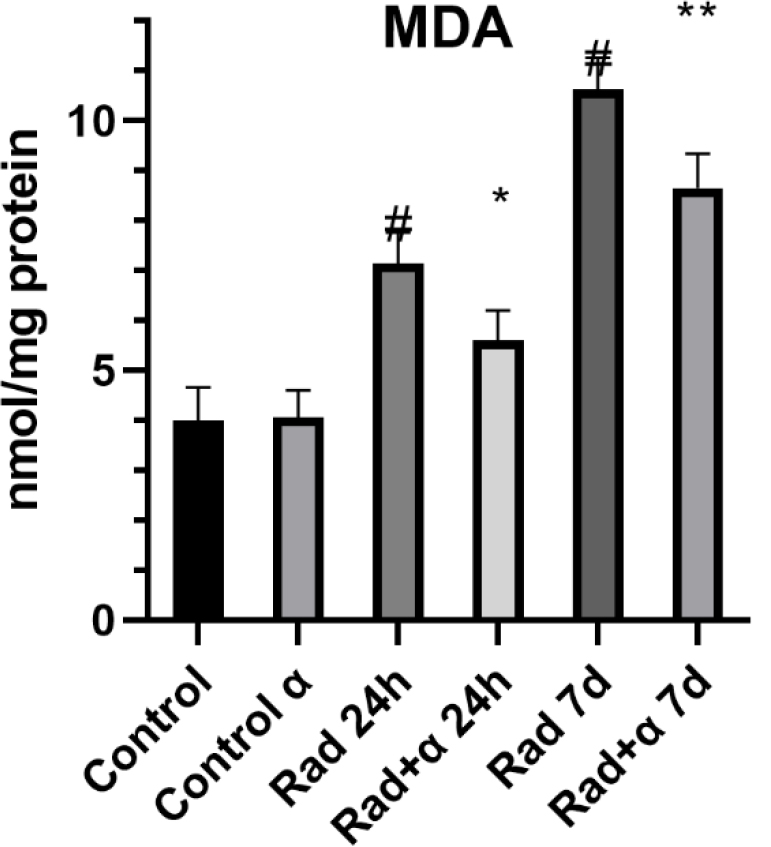
Figure 1.Malondialdehyde (MDA) levels across experimental groups. Groups: Control (non-irradiated, distilled water), Control+α (α-Tocotrienol without irradiation), Rad24h (irradiated, sampled at 24 h), Rad+α24h (irradiated + α-Tocotrienol, sampled at 24 h), Rad7d (irradiated, sampled at 1 week), and Rad+α7d (irradiated + α-Tocotrienol, sampled at 1 week). Significant differences: #P<0.001 versus Control, *P<0.05 versus Rad24h, **P<0.05 versus Rad7d.
At 24 h post-irradiation, MDA levels were 7.148±0.618 nmol/mg protein in the irradiated group (Group 3) and 5.604±0.596 nmol/mg protein in the irradiated + α-Tocotrienol group (Group 4), showing a significant reduction with α-Tocotrienol treatment (P<0.05).
Similarly, at one-week post-irradiation, MDA levels were significantly lower in the α-Tocotrienol–treated rats (Group 6: 8.655±0.687 nmol/mg protein) compared with untreated irradiated rats (Group 5: 10.633±0.630 nmol/mg protein) (P<0.05).
Superoxidase dismutase activity measurement results
Figure 2 illustrates a pronounced decline in Superoxide Dismutase (SOD) activity following irradiation compared with control groups (P<0.01). At 24 h, SOD activity measured 7.708±0.678 nmol/mg protein in irradiated rats (Group 3), whereas α-Tocotrienol treatment significantly elevated the activity to 9.553±0.595 nmol/mg protein (Group 4, P<0.05). At one-week post-irradiation, enzyme activity remained depressed in untreated rats (Group 5: 3.659±0.784 nmol/mg protein) but was significantly higher in the α-Tocotrienol–treated group (Group 6: 6.263±0.595 nmol/mg protein, P<0.05).
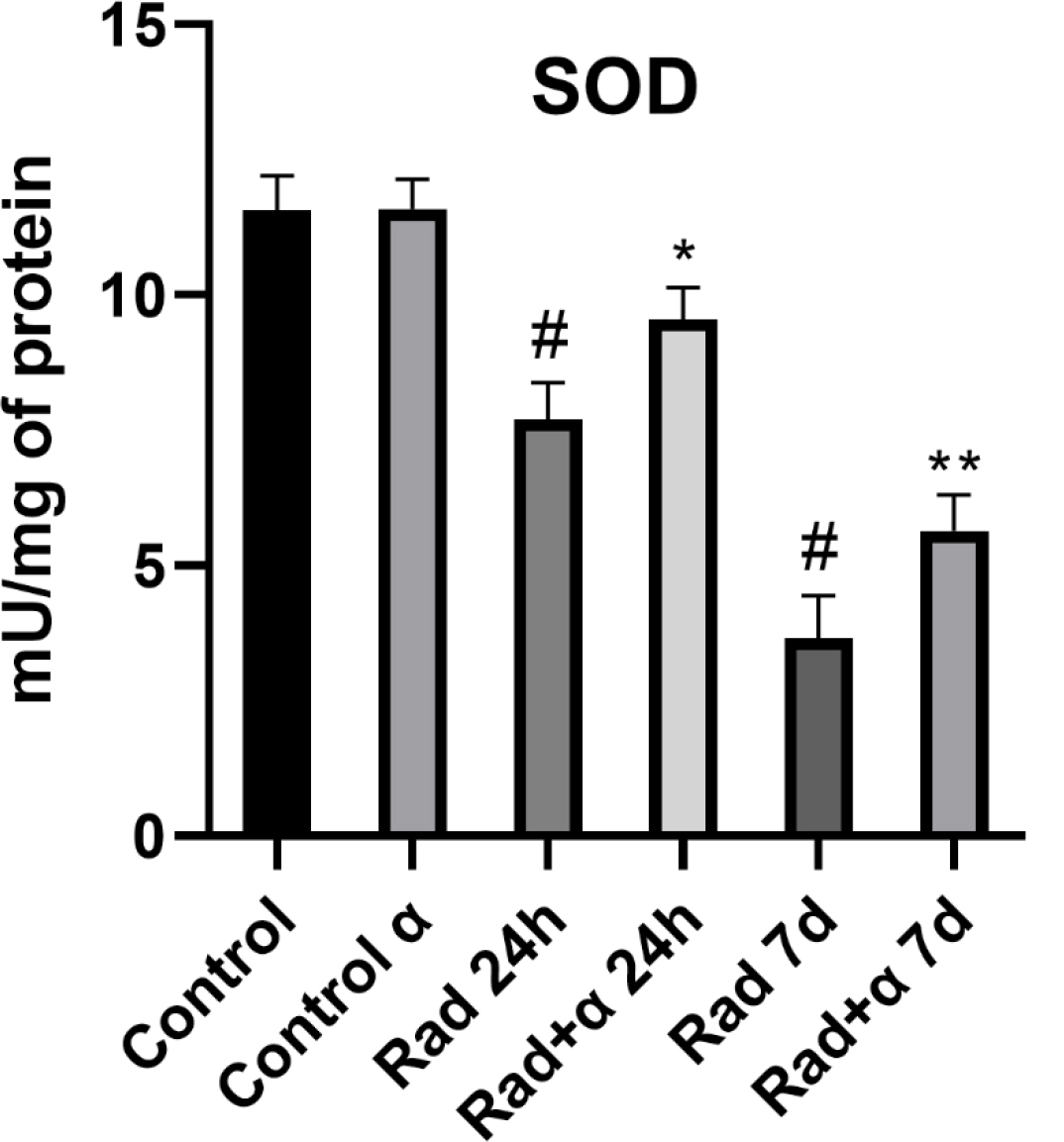
Figure 2. Superoxide Dismutase (SOD) activity across experimental groups. Groups: Control (non-irradiated, distilled water), Control+α (α-Tocotrienol only), Rad24h (irradiated, sampled at 24 h), Rad+α24h (irradiated + α-Tocotrienol, sampled at 24 h), Rad7d (irradiated, sampled at 1 week), and Rad+α7d (irradiated + α-Tocotrienol, sampled at 1 week). Significant differences: #P<0.001 versus Control; *P<0.05 versus Rad24h; **P<0.05 versus Rad7d
Catalase activity measurement results
As shown in Figure 3, irradiation significantly reduced Catalase (CAT) activity compared with controls (P<0.01). At 24 h post-irradiation, CAT activity was 5.808±0.683 nmol/mg protein in the irradiated group (Group 3) and 7.370±0.613 nmol/mg protein in the α-Tocotrienol–treated group (Group 4), indicating a significant increase with treatment (P<0.05). Similarly, at one-week post-irradiation, CAT activity was significantly higher in the treated group (Group 6: 4.403±0.682 nmol/mg protein) compared with the untreated irradiated group (Group 5: 2.139±0.642 nmol/mg protein) (P<0.05).
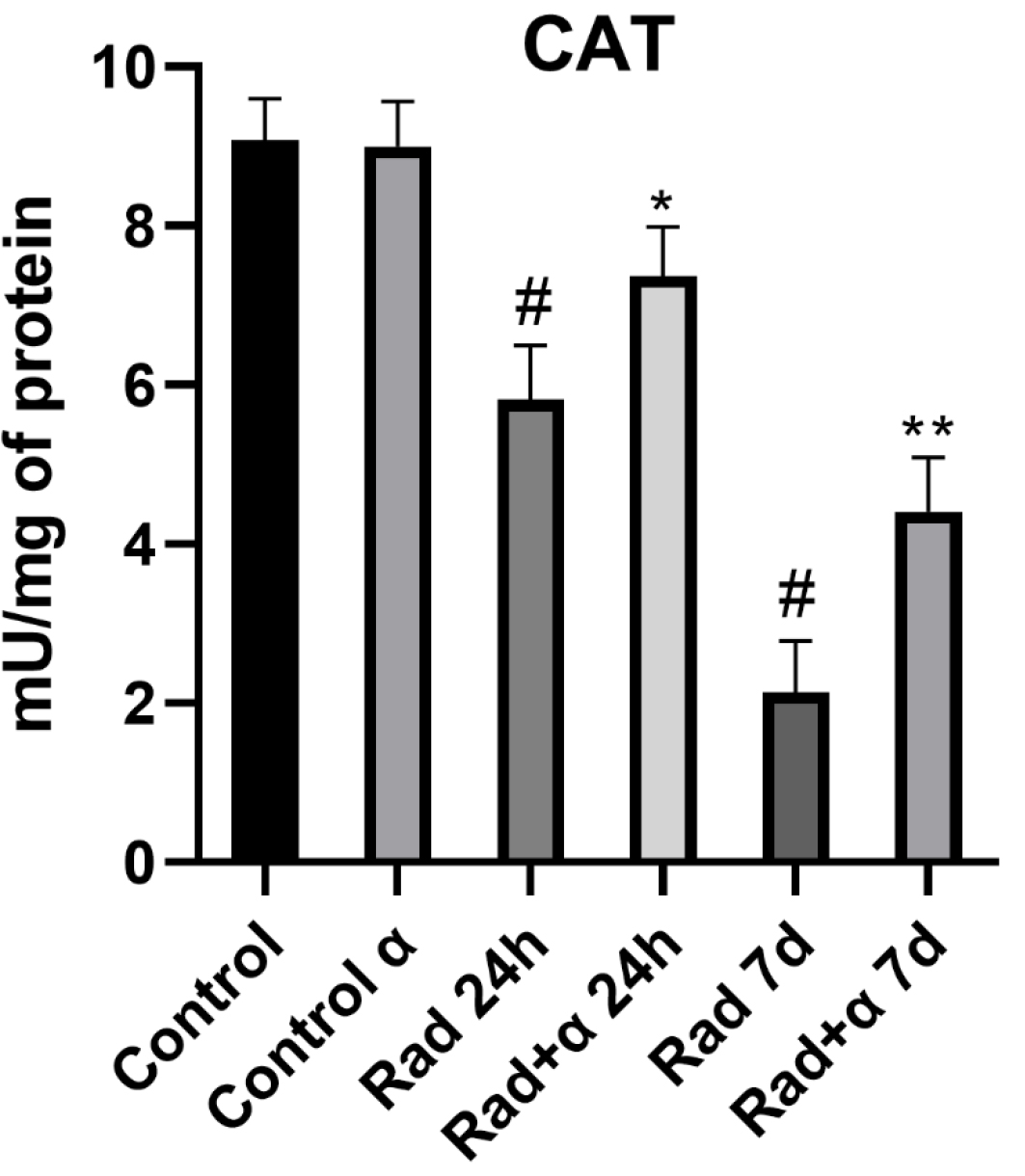
Figure 3. Catalase (CAT) activity across experimental groups. Groups: Control (non-irradiated, distilled water), Control+α (α-Tocotrienol only), Rad24h (irradiated, sampled at 24 h), Rad+α24h (irradiated + α-Tocotrienol, sampled at 24 h), Rad7d (irradiated, sampled at 1 week), and Rad+α7d (irradiated + α-Tocotrienol, sampled at 1 week). Significant differences: #P<0.001 versus Control; *P<0.05 versus Rad24h; **P<0.05 versus Rad7d.
Glutathione peroxidase activity measurement results
According to Figure 4, irradiation significantly reduced glutathione peroxidase (GPx) activity compared with controls (P<0.01). At 24 h post-exposure, GPx activity in irradiated rats (Group 3) was 5.960±0.616 nmol/mg protein, whereas α-Tocotrienol treatment significantly enhanced the activity (Group 4: 7.539±0.508 nmol/mg protein, P<0.05). Similarly, at one week, GPx activity remained lower in untreated irradiated rats (Group 5: 2.867±0.599 nmol/mg protein) but was significantly improved in the α-Tocotrienol–treated group (Group 6: 4.421±0.651 nmol/mg protein, P<0.05).
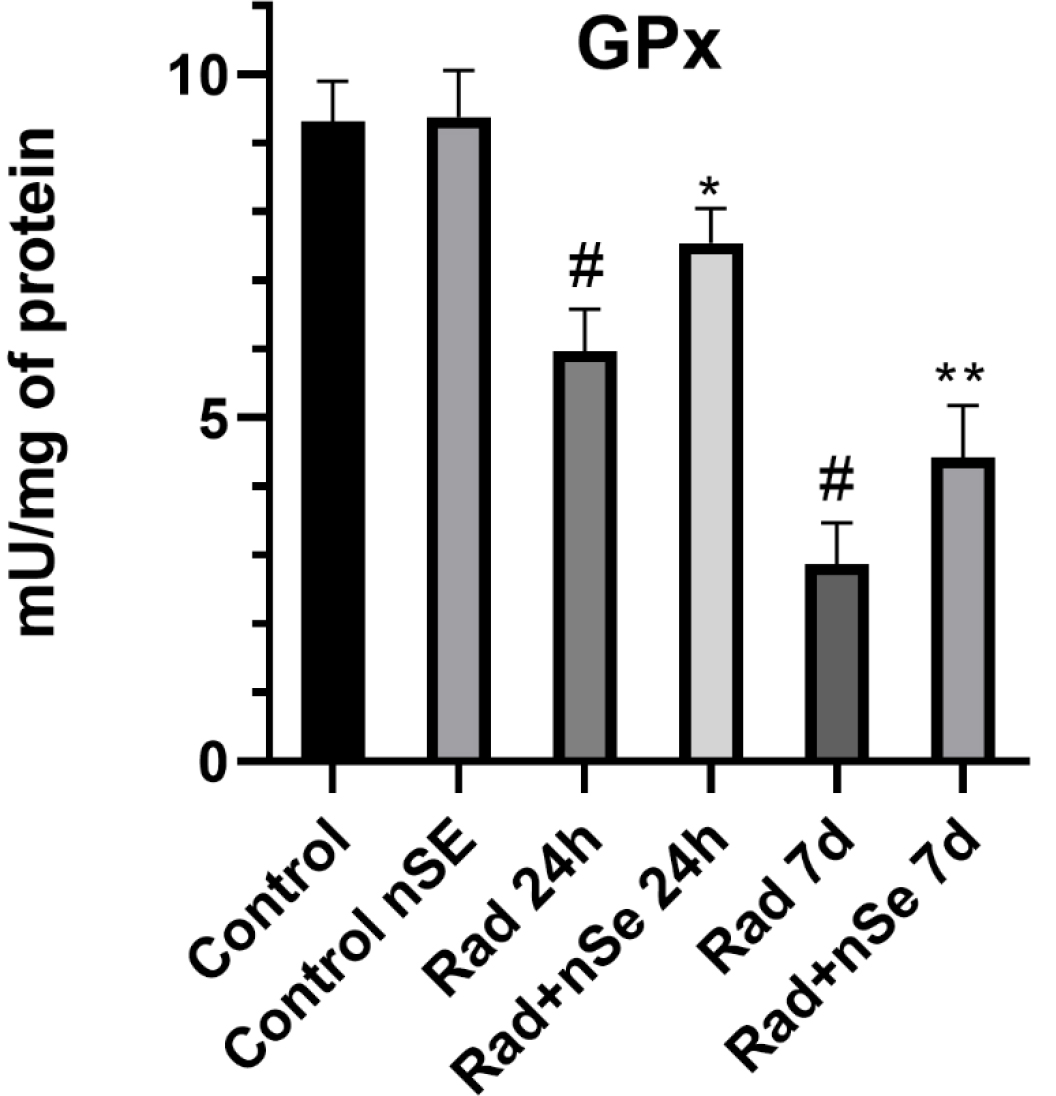
Figure 4. Glutathione peroxidase (GPx) activity across experimental groups. Groups: Control (non-irradiated, distilled water), Control+α (α-Tocotrienol only), Rad24h (irradiated, sampled at 24 h), Rad+α24h (irradiated + α-Tocotrienol, sampled at 24 h), Rad7d (irradiated, sampled at 1 week), and Rad+α7d (irradiated + α-Tocotrienol, sampled at 1 week). Significant differences: #P<0.001 versus Control; *P<0.05 versus Rad24h; **P<0.05 versus Rad7d
Histopathological Results of Brain Tissue
Histopathological evaluation revealed clear evidence of radiation-induced neuronal injury as well as protective effects of α-Tocotrienol.
In the cerebral cortex (Figure 5; Panels C and E), irradiated rats displayed marked neuronal degeneration, including shrunken, pyknotic, and hyperchromatic nuclei, particularly within the granular and molecular layers. Pyramidal neurons were more severely affected than other neuronal types, showing chromatolysis and disrupted Nissl granule distribution. However, vascular dilation and microglial aggregation were not observed.
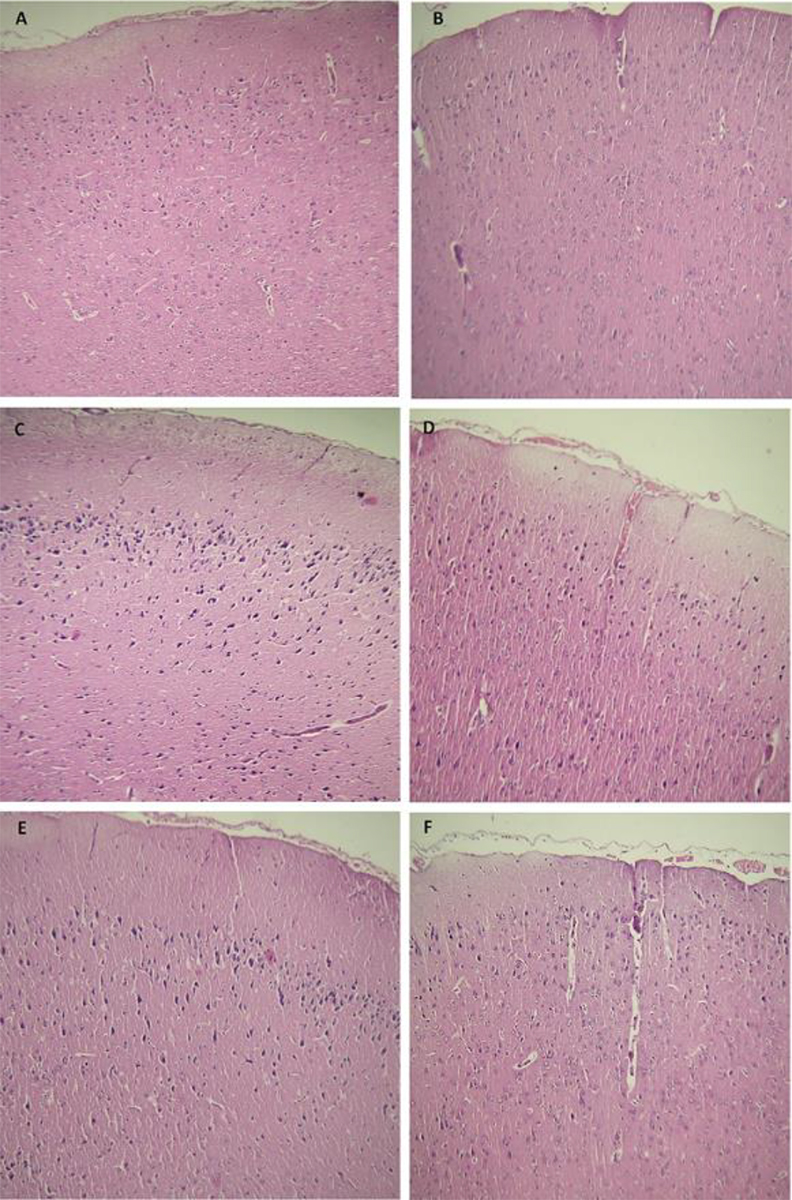
Figure 5. Hematoxylin and Eosin (H&E) staining of cortical tissue (40× magnification) across experimental groups: (A) Healthy control (untreated), (B) Control + α-Tocotrienol (no irradiation), (C) Irradiated (24 h post-exposure), (D) Irradiated + α-Tocotrienol (24 h post-exposure), (E) Irradiated (1-week post-exposure), and (F) Irradiated + α-Tocotrienol (1-week post-exposure).
Quantitative analysis of the hippocampus (Figure 6) confirmed a significant reduction in healthy pyramidal cell density in the CA1 region of irradiated groups compared with controls (P<0.05). These degenerative changes were more pronounced at one-week post-irradiation (Panel E) than at 24 h (Panel C).
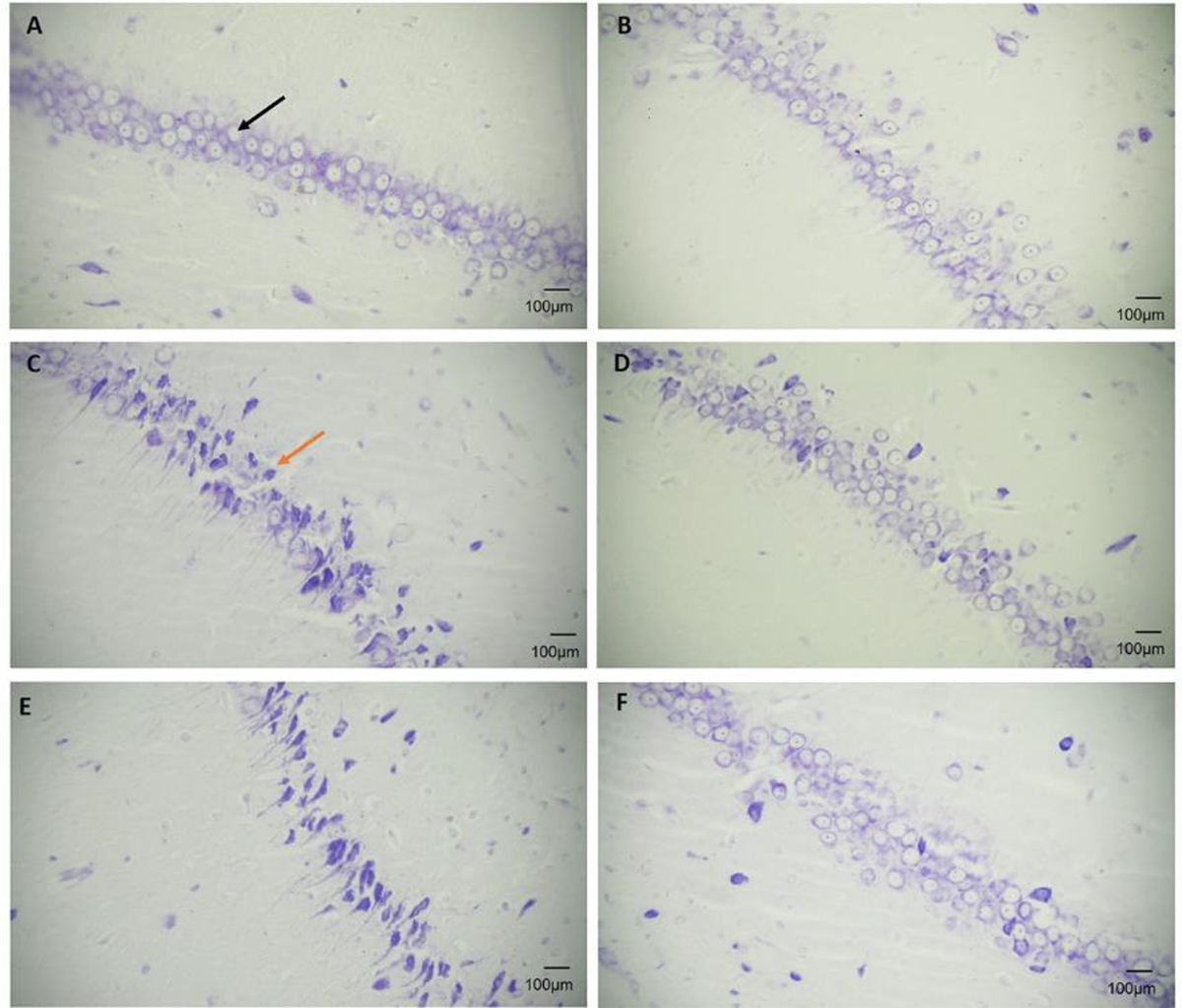
Figure 6. Cresyl violet staining of the hippocampal CA1 region (400× magnification) across experimental groups: (A) Healthy control (untreated), (B) Control + α-Tocotrienol (no irradiation), (C) Irradiated (24 h post-exposure), (D) Irradiated + α-Tocotrienol (24 h post-exposure), (E) Irradiated (1-week post-exposure), and (F) Irradiated + α-Tocotrienol (1-week post-exposure). Black arrows indicate healthy neurons; orange arrows mark degenerated (dark) neurons.
By contrast, α-Tocotrienol treatment preserved near-normal cortical architecture. Treated rats (Panels B and F) exhibited neurons with large central nuclei, distinct nucleoli, and normal Nissl granule distribution, closely resembling controls (Panel A). In the hippocampus, α-Tocotrienol markedly attenuated pyramidal cell death and degenerative changes, with greater neuroprotection observed at one week (Panel F) compared with 24 h (Panel D). In addition, α-Tocotrienol reduced neuronal loss in both the granular and molecular layers, highlighting its broad cytoprotective effect against radiation-induced brain injury.
Histopathological analysis of the brain tissue, particularly in the hippocampus and cerebral cortex, supports the hypothesis that α-Tocotrienol protects against radiation-induced neuronal damage. The preservation of neuronal integrity, including improved Nissl granule distribution and reduced neuronal degeneration, indicates its potential as a neuroprotective agent.
Discussion
Radiation therapy is an essential modality in cancer management; however, irradiation of normal brain tissue remains a major clinical concern due to its association with cognitive impairment, sensory dysfunction, and reduced quality of life [ 20 ]. Radiation-induced brain injury is primarily mediated by oxidative stress and progressive neuronal damage, particularly within radiosensitive regions such as the hippocampus [ 21 ].
Several radioprotective agents have been investigated to reduce these adverse effects. Amifostine, the first clinically approved radioprotector, has demonstrated broad protective efficacy; however, its clinical application is limited by toxicity and unfavorable side-effect profiles [ 22 ]. Alternative protective strategies using agents, such as melatonin, glutamine, and octreotide have been explored, but their effectiveness remains inconsistent and largely preclinical [ 23 ].
In recent years, vitamin E isoforms, particularly tocotrienols, have gained attention as promising radiation countermeasures [ 24 ]. Among these, α-tocotrienol exhibits potent antioxidant and anti-inflammatory properties with a favorable safety profile. In contrast, selenium-based radioprotective compounds may induce redox imbalance and organ toxicity at higher doses, limiting their clinical utility [ 25 ].
The present findings demonstrate that α-tocotrienol significantly attenuates radiation-induced oxidative stress, as evidenced by decreased levels of malondialdehyde, a widely accepted marker of lipid peroxidation [ 26 ]. This effect is accompanied by restoration of key antioxidant enzymes, including superoxide dismutase and glutathione peroxidase, which play central roles in cellular defense against radiation-induced oxidative injury [ 27 , 28 ]. Quantitative analysis revealed a 20–53.5% recovery of antioxidant enzyme activity and an 18–51% reduction in lipid peroxidation compared with irradiated controls, with protective effects persisting up to one-week post-irradiation.
Histopathological findings further support the neuroprotective role of α-tocotrienol. Preservation of pyramidal neurons, reduced CA1 hippocampal damage, maintenance of Nissl granule distribution, and a decrease in pyknotic nuclei collectively indicate attenuation of progressive radiation-induced neuronal injury. Comparable tissue-protective effects of tocotrienols have been reported in cochlear structures exposed to ionizing radiation [ 29 ] and in hematopoietic progenitor cells [ 30 ].
Mechanistically, tocotrienol-mediated radioprotection has been linked to modulation of intracellular signaling pathways involved in oxidative stress regulation and cell survival, including ERK/mTOR and Nrf2-related antioxidant responses [ 17 ]. Taken together, these findings suggest that α-tocotrienol represents a promising radioprotective agent with potential translational relevance for mitigating radiation-induced brain injury. Nevertheless, further dose–response studies and detailed molecular pathway analyses are required before its integration into routine clinical radiotherapy protocols can be fully realized [ 31 ].
Importantly, the protective effect of α-Tocotrienol on normal brain tissue observed in this study highlights its potential clinical value for minimizing radiotherapy-induced neuronal damage. Nevertheless, the impact on tumor cells remains uncertain. In clinical settings, any radioprotection extended to malignant cells could compromise the tumoricidal efficacy of radiotherapy, particularly in brain tumors. Therefore, it is critical to investigate whether α-Tocotrienol selectively shields normal tissue while sparing neoplastic cells. Future studies in tumor-bearing models are essential to establish dosing strategies and timing that optimize neuroprotection without undermining therapeutic outcomes.
Future studies should focus on α-Tocotrienol’s effects in tumor-bearing animal models to assess its ability to selectively protect normal tissues without affecting tumor cells. Additionally, clinical trials incorporating dose-escalation studies and pharmacokinetic analyses of α-Tocotrienol will be essential to refine its therapeutic application and optimize dosing strategies.
Nevertheless, an important clinical limitation must be acknowledged. Radioprotectors may lack strict selectivity and thus protect both healthy and malignant cells simultaneously, which could reduce the tumoricidal efficacy of radiotherapy. This concern is particularly relevant in brain tumors, where sparing neoplastic cells may compromise therapeutic outcomes. Although the present data underscore α-Tocotrienol’s robust protective capacity in normal brain tissue, further investigations are required in tumor-bearing models to determine whether these protective effects extend to malignant cells. Only by establishing selective protection of normal tissues can α-Tocotrienol be considered a safe and viable clinical adjunct to radiotherapy.
A limitation of this study is that it focuses solely on irradiated normal brain tissue, with no evaluation of tumor-bearing models. While the results suggest α-Tocotrienol’s potential as a radioprotector, its effects on tumor cells and its selective protective capacity require further investigation in preclinical and clinical settings. Additionally, the safety and efficacy of long-term α-Tocotrienol use at therapeutic doses need to be explored.
Conclusion
Despite extensive research on radioprotective agents for brain tissue, including compounds such as melatonin and amifostine, their high cost and significant toxicity underscore the need for safer and more effective alternatives. α-Tocotrienol, a potent vitamin E derivative, has emerged as a promising candidate due to its strong antioxidant capacity, neuroprotective properties, and favorable safety profile. The present study demonstrates that α-Tocotrienol significantly mitigates radiation-induced brain injury, as shown by preserved neuronal architecture and reduced oxidative stress markers. These findings suggest its potential as a neuroprotective adjunct during radiotherapy, providing both biochemical and structural protection.
While α-Tocotrienol shows substantial promise for protecting normal brain tissue, its clinical translation requires careful consideration of potential tumor protection. Further studies are needed to evaluate selective protection in tumor-bearing models, optimize dosing schedules, and elucidate molecular mechanisms such as Nrf2 activation and anti-inflammatory pathways. Establishing selective protection of normal tissues will be pivotal for safely integrating α-Tocotrienol into clinical radiotherapy protocols and ultimately improving patient outcomes and quality of life.
However, it is important to acknowledge that radioprotectors may also shield malignant cells, potentially compromising the therapeutic efficacy of radiotherapy. Therefore, while α-Tocotrienol shows substantial promise for protecting normal brain tissue, further studies are required to evaluate its selectivity in tumor-bearing models, optimize dosing strategies, and clarify its molecular mechanisms (e.g., Nrf2 activation and anti-inflammatory pathways). Establishing selective protection of normal tissue will be critical for translating α-Tocotrienol into clinical practice and ultimately improving patient quality of life.
Acknowledgment
The authors would like to thank the staff of the Department of Radiology Technology and the Animal Research Center of Hamadan University of Medical Sciences for their technical assistance and support during the experimental procedures. The authors also acknowledge the use of [ChatGPT] (https://chatgpt.com?utm_source=chatgpt.com) (OpenAI, GPT-5.5 version) for English language editing, grammar correction, and improvement of manuscript readability. The authors reviewed and approved all final content.
Authors’ Contribution
K. Ghazikhanlou Sani and S. Jafari conceptualized and designed the study. MJ. Ebrahimi performed the experimental procedures and data collection. A. Bakhtiari conducted the histopathological evaluations. Data analysis and manuscript drafting were carried out by the corresponding author. All authors critically reviewed the manuscript and approved the final version.
Ethical Approval
All animal procedures were conducted in accordance with the guidelines of the Ethics Committee in Medicine of Hamadan University of Medical Sciences (Hamadan, Iran), approval code IR.UMSHA.AEC.1404.012.
Informed Consent
Not applicable, as this study was conducted on laboratory animals and did not involve human participants.
Funding
This study was supported by a research grant from Hamadan University of Medical Sciences, Hamadan, Iran (Grant No.: 140010148493).
Conflict of Interest
None
Data Availability Statement
The training sets (TS1, TS2, and TS3) described in this study and the code generating the results are publicly available at https://github.com/labCOI/microscopy_illumination_correction.
References
- Siegel RL, Miller KD, Wagle NS, Jemal A. Cancer statistics, 2023. CA Cancer J Clin. 2023; 73(1):17-48. DOI | PubMed
- Wu Y, Song Y, Wang R, Wang T. Molecular mechanisms of tumor resistance to radiotherapy. Mol Cancer. 2023; 22(1):96. Publisher Full Text | DOI | PubMed [ PMC Free Article ]
- Yang Y, Xiong L, Li M, Jiang P, Wang J, Li C. Advances in radiotherapy and immunity in hepatocellular carcinoma. J Transl Med. 2023; 21(1):526. Publisher Full Text | DOI | PubMed [ PMC Free Article ]
- Morris S, Roques T, Ahmad S, Loo S. Practical radiotherapy planning. Boca Raton: CRC Press; 2023.
- Kholmatov S, Madaminov S, Zokirjonov D, Sobirova D. A comprehensive review of radiotherapy and chemotherapy-induced morphological side effects in breast cancer treatment: Strategies for management and mitigation. Sci Innov. 2024; 3(D6):11-24. DOI
- Barazzuol L, Coppes RP, Van Luijk P. Prevention and treatment of radiotherapy-induced side effects. Mol Oncol. 2020; 14(7):1538-54. Publisher Full Text | DOI | PubMed [ PMC Free Article ]
- Citrin DE. Recent Developments in Radiotherapy. N Engl J Med. 2017; 377(11):1065-75. DOI | PubMed
- DeNunzio NJ, Yock TI. Modern Radiotherapy for Pediatric Brain Tumors. Cancers (Basel). 2020; 12(6):1533. Publisher Full Text | DOI | PubMed [ PMC Free Article ]
- Obrador E, Salvador R, Villaescusa JI, Soriano JM, Estrela JM, Montoro A. Radioprotection and Radiomitigation: From the Bench to Clinical Practice. Biomedicines. 2020; 8(11):461. Publisher Full Text | DOI | PubMed [ PMC Free Article ]
- Shivappa P, Bernhardt GV. Natural Radioprotectors on Current and Future Perspectives: A Mini-Review. J Pharm Bioallied Sci. 2022; 14(2):57-71. Publisher Full Text | DOI | PubMed [ PMC Free Article ]
- Foye WO. In: Bump EA, Malaker K, editors. Radioprotectors: chemical, biological, and clinical perspectives. Boca Raton: CRC Press; 2021.
- Montoro A, Obrador E, Mistry D, Forte GI, Bravatà V, Minafra L, Calvaruso M, et al. Radioprotectors, radiomitigators, and radiosensitizers. In: Baatout S, editor. Radiobiology textbook Cham: Springer International Publishing; 2023.
- Fairus S, Cheng HM, Sundram K. Antioxidant status following postprandial challenge of two different doses of tocopherols and tocotrienols. J Integr Med. 2020; 18(1):68-79. DOI | PubMed
- Ranasinghe R, Mathai M, Zulli A. Revisiting the therapeutic potential of tocotrienol. Biofactors. 2022; 48(4):813-56. Publisher Full Text | DOI | PubMed [ PMC Free Article ]
- Ibrahim NF, Hamezah HS, Yanagisawa D, Tsuji M, Kiuchi Y, Ono K, Tooyama I. The effect of α-tocopherol, α- and γ-tocotrienols on amyloid-β aggregation and disaggregation in vitro. Biochem Biophys Rep. 2021; 28:101131. Publisher Full Text | DOI | PubMed [ PMC Free Article ]
- Serbinova EA, Tsuchiya M, Goth S, Kagan VE, Packer L. Antioxidant action of α-tocopherol and α-tocotrienol in membranes. In: Packer L, Fuchs J, editors. Vitamin E in Health and Disease New York: Marcel Dekker; 1993.
- Shrum SA, Nukala U, Shrimali S, Pineda EN, Krager KJ, Thakkar S, et al. Tocotrienols Provide Radioprotection to Multiple Organ Systems through Complementary Mechanisms of Antioxidant and Signaling Effects. Antioxidants (Basel). 2023; 12(11):1987. Publisher Full Text | DOI | PubMed [ PMC Free Article ]
- Mohamad NV, Ima-Nirwana S, Chin KY. Therapeutic potential of annatto tocotrienol with self-emulsifying drug delivery system in a rat model of postmenopausal bone loss. Biomed Pharmacother. 2021; 137:111368. DOI | PubMed
- Satyamitra M, Ney P, Graves J 3rd, Mullaney C, Srinivasan V. Mechanism of radioprotection by δ-tocotrienol: pharmacokinetics, pharmacodynamics and modulation of signalling pathways. Br J Radiol. 2012; 85(1019):e1093-103. Publisher Full Text | DOI | PubMed [ PMC Free Article ]
- Greene-Schloesser D, Robbins ME, Peiffer AM, Shaw EG, Wheeler KT, Chan MD. Radiation-induced brain injury: A review. Front Oncol. 2012; 2:73. Publisher Full Text | DOI | PubMed [ PMC Free Article ]
- Makale MT, McDonald CR, Hattangadi-Gluth JA, Kesari S. Mechanisms of radiotherapy-associated cognitive disability in patients with brain tumours. Nat Rev Neurol. 2017; 13(1):52-64. Publisher Full Text | DOI | PubMed [ PMC Free Article ]
- Kouvaris JR, Kouloulias VE, Vlahos LJ. Amifostine: the first selective-target and broad-spectrum radioprotector. Oncologist. 2007; 12(6):738-47. DOI | PubMed
- Jafarpour SM, Shekarchi B, Bagheri H, Farhood B. The Radioprotective Effects of Melatonin and Nanoselenium on DNA Double-Strand Breaks in Peripheral Lymphocytes Caused by I-131. Indian J Nucl Med. 2021; 36(2):134-9. Publisher Full Text | DOI | PubMed [ PMC Free Article ]
- Singh VK, Beattie LA, Seed TM. Vitamin E: tocopherols and tocotrienols as potential radiation countermeasures. J Radiat Res. 2013; 54(6):973-88. Publisher Full Text | DOI | PubMed [ PMC Free Article ]
- Misra S, Boylan M, Selvam A, Spallholz JE, Björnstedt M. Redox-active selenium compounds--from toxicity and cell death to cancer treatment. Nutrients. 2015; 7(5):3536-56. Publisher Full Text | DOI | PubMed [ PMC Free Article ]
- Morales M, Munné-Bosch S. Malondialdehyde: Facts and Artifacts. Plant Physiol. 2019; 180(3):1246-50. Publisher Full Text | DOI | PubMed [ PMC Free Article ]
- Bafana A, Dutt S, Kumar A, Kumar S, Ahuja PS. The basic and applied aspects of superoxide dismutase. J Mol Catal B Enzym. 2011; 68(2):129-38. DOI
- Singh BG, Bag PP, Kumakura F, Iwaoka M, Priyadarsini KI. Role of substrate reactivity in the glutathione peroxidase (GPx) activity of selenocystine. Bull Chem Soc Jpn. 2010; 83(6):703-8. DOI
- Ghosh SP, Kulkarni S, Hieber K, Toles R, Romanyukha L, Kao TC, et al. Gamma-tocotrienol, a tocol antioxidant as a potent radioprotector. Int J Radiat Biol. 2009; 85(7):598-606. DOI | PubMed
- Li XH, Fu D, Latif NH, Mullaney CP, Ney PH, Mog SR, et al. Delta-tocotrienol protects mouse and human hematopoietic progenitors from gamma-irradiation through extracellular signal-regulated kinase/mammalian target of rapamycin signaling. Haematologica. 2010; 95(12):1996-2004. Publisher Full Text | DOI | PubMed [ PMC Free Article ]
- Citrin D, Cotrim AP, Hyodo F, Baum BJ, Krishna MC, Mitchell JB. Radioprotectors and mitigators of radiation-induced normal tissue injury. Oncologist. 2010; 15(4):360-71. Publisher Full Text | DOI | PubMed [ PMC Free Article ]


